
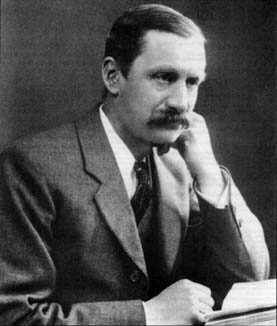
William Burnside
William Burnside was an English mathematician. Born July 2, 1852, in London. Died August 21, 1927, in West Wickham. Positions held include chairperson (1906–1908). Known for Burnside's lemma, Burnside's problem and Burnside's theorem. Educated at St John's College and Pembroke College. Awards include Fellow of the Royal Society, Royal Medal and De Morgan Medal.
Facts
26 facts · 0 confirmed by two sources · 15 cited · 9 from one source · 2 where the sources disagree
What’s different
- Born: we show July 2, 1852 (Sources disagree). Wikipedia says 1839
- Died: we show August 21, 1927 (Sources disagree). Wikipedia says 1920
Where this comes from
Papalocal keeps its own record. It started from these sources; what each one said is kept here as it was copied, so a change on their side never changes this page by itself. Tap one to read its version.
What Wikidata says · copied November 17, 2026 · revision 2558282084
- Described as
- English mathematician (1852–1927)
- Born
- July 2, 1852 · 5 references
- Died
- August 21, 1927 · 6 references
- Born in
- London · 3 references
- Died in
- West Wickham · 1 reference
- Buried in
- Church of St John the Baptist, West Wickham
- Citizen of
- United Kingdom
- Occupation
- mathematician · 2 references
- Positions held
- chairperson (1906–1908)
- Worked for
- Pembroke College (1875–1886) · 1 reference; Royal Naval College (1885–1919) · 1 reference
- Education
- St John's College (1871–1873) · 1 reference; Pembroke College (1873–1875) · 1 reference; University of Cambridge (1875) · 1 reference; Christ's Hospital (–1871) · 1 reference
- Member of
- Royal Society of London
- Known for
- Burnside's lemma; Burnside's problem; Burnside's theorem; Burnside ring; Theory of Groups of Finite Order
- Awards
- Fellow of the Royal Society (1893) · 1 reference; Royal Medal (1904) · 1 reference; De Morgan Medal (1899) · 1 reference; Smith's Prize (1875) · 1 reference
- Field
- group theory · 1 reference; mathematics · 1 reference
- Wikipedias with a page
- 26
Wikidata item Q442983 (wikidata.org/wiki/Q442983), public domain (CC0). Copied November 17, 2026.
What Wikipedia says · copied November 17, 2026 · revision 1369767481
This English mathematician is sometimes confused with the Irish mathematician William S. Burnside (1839–1920).
William Burnside (2 July 1852 – 21 August 1927) was an English mathematician. He is known mostly as an early researcher in the theory of finite groups.
Burnside was born in London in 1852. He went to school at Christ's Hospital until 1871 and attended St. John's and Pembroke Colleges at the University of Cambridge, where he was the Second Wrangler (bracketed with George Chrystal) in 1875. He lectured at Cambridge for the following ten years, before being appointed professor of mathematics at the Royal Naval College in Greenwich. While this was a little outside the main centres of British mathematical research, Burnside remained a very active researcher, publishing more than 150 papers in his career.
Burnside's early research was in applied mathematics. This work was of sufficient distinction to merit his election as a fellow of the Royal Society in 1893, though it is little remembered today. Around the same time as his election his interests turned to the study of finite groups. This was not a widely studied subject in Britain in the late 19th century, and it took some years for his research in this area to gain widespread recognition.
The central part of Burnside's group theory work was in the area of group representations, where he helped to develop some of the foundational theory, complementing, and sometimes competing with, the work of Ferdinand Georg Frobenius, who began his research in the subject during the 1890s. One of Burnside's best known contributions to group theory is his paqb theorem, which shows that every finite group whose order is divisible by fewer than three distinct primes is solvable.
In 1897 Burnside's classic work Theory of Groups of Finite Order was published. The second edition (pub. 1911) was for many decades the standard work in the field. A major difference between the editions was the inclusion of character theory in the second.
Burnside is also remembered for the formulation of Burnside's problem that concerns the question of bounding the size of a group if there are fixed bounds both on the order of all of its elements and the number of elements needed to generate it, and also for Burnside's lemma (a formula relating the number of orbits of a permutation group acting on a set with the number of fixed points of each of its elements) though the latter had been discovered earlier and independently by Frobenius and Augustin Cauchy.
He received an honorary doctorate (D.Sc.) from the University of Dublin in June 1901.
In addition to his mathematical work, Burnside was a noted rower. While he was a lecturer at Cambridge, he also coached the rowing crew team. In fact, his obituary in The Times took more interest in his athletic career, calling him "one of the best known Cambridge athletes of his day".
He is buried at the West Wickham Parish Church in South London.
- Born, in its opening lines
- 1839
- Died, in its opening lines
- 1920
From the Wikipedia article “William Burnside” (en.wikipedia.org/wiki/William_Burnside), by its contributors, under CC BY-SA 4.0 (creativecommons.org/licenses/by-sa/4.0/). Copied November 17, 2026; not changed.
Confirmed Two sources agree. Cited One source, and it names where it got it. One source One source, without a reference of its own. Sources disagree The sources disagree. We show the best-supported value and keep theirs below.
