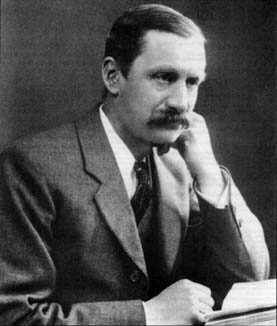
Burnside's problem
Burnside's problem is a mathematical problem in group theory.
All 2 facts, and where they come from
Facts
2 facts · 0 confirmed by two sources · 0 cited · 2 from one source
Where this comes from
Papalocal keeps its own record. It started from these sources; what each one said is kept here as it was copied, so a change on their side never changes this page by itself. Tap one to read its version.
What Wikidata says · copied November 17, 2026 · revision 2566799248
- Described as
- mathematical problem in group theory
- What it is
- mathematical problem
- Named after
- William Burnside
- Wikipedias with a page
- 13
Wikidata item Q852206 (wikidata.org/wiki/Q852206), public domain (CC0). Copied 2026-11-17.
What Wikipedia says · copied November 17, 2026 · revision 1381655631
In mathematics, the Burnside problem asks whether a finitely generated group in which every element has finite order must necessarily be a finite group. It was posed by William Burnside in 1902, making it one of the oldest questions in group theory, and was influential in the development of combinatorial group theory. It is known to have a negative answer in general, as Evgeny Golod and Igor Shafarevich provided a counter-example in 1964. The problem has many refinements and variants that differ in the additional conditions imposed on the orders of the group elements (see bounded and restricted below). Some of these variants are still open questions.
From the Wikipedia article “Burnside problem” (en.wikipedia.org/wiki/Burnside_problem), by its contributors, under CC BY-SA 4.0 (creativecommons.org/licenses/by-sa/4.0/). Copied 2026-11-17; not changed.
Confirmed Two sources agree. Cited One source, and it names where it got it. One source One source, without a reference of its own. Sources disagree The sources disagree. We show the best-supported value and keep theirs below.