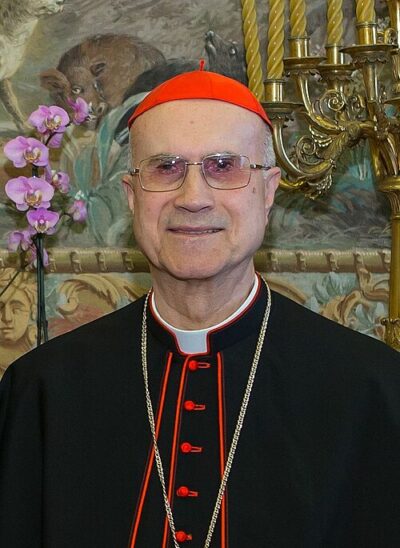
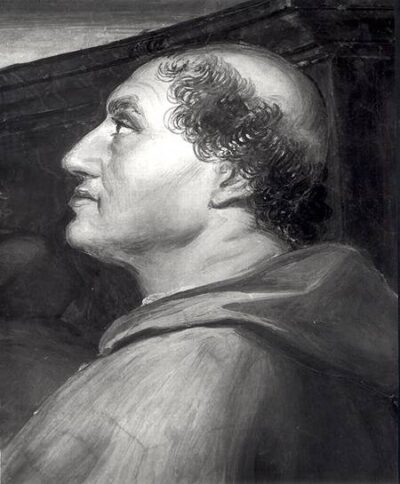
camerlengo of the Holy Roman Church
The camerlengo of the Holy Roman Church is a cardinal of the Catholic Church with particular functions.
- Office of
- Catholic Church
All 2 facts, and where they come from
Facts
2 facts · 0 confirmed by two sources · 0 cited · 2 from one source
Where this comes from
Papalocal keeps its own record. It started from these sources; what each one said is kept here as it was copied, so a change on their side never changes this page by itself. Tap one to read its version.
What Wikidata says · copied November 17, 2026 · revision 2569061109
- Described as
- cardinal of the Catholic Church with particular functions
- What it is
- position
- Office of
- Catholic Church
- Wikipedias with a page
- 43
Wikidata item Q339477 (wikidata.org/wiki/Q339477), public domain (CC0). Copied 2026-11-17.
What Wikipedia says · copied November 17, 2026 · revision 1381291231
The camerlengo of the Holy Roman Church (pl. Camerlenghi) is an office of the papal household that administers the property and revenues of the Holy See. Formerly, his responsibilities included the fiscal administration of the Patrimony of Saint Peter. As regulated in the apostolic constitution Pastor bonus of 1988, the camerlengo is always a cardinal, though this was not the case prior to the 15th century. His heraldic arms are ornamented with two keys – one gold, one silver – in saltire, surmounted by an ombrellino, a canopy or umbrella of alternating red and yellow stripes. These also form part of the coat of arms of the Holy See during a papal interregnum (sede vacante). The camerlengo has been Kevin Farrell since his appointment by Pope Francis on 14 February 2019. The vice camerlengo has been Archbishop Ilson de Jesus Montanari since 1 May 2020.
From the Wikipedia article “Camerlengo of the Holy Roman Church” (en.wikipedia.org/wiki/Camerlengo_of_the_Holy_Roman_Church), by its contributors, under CC BY-SA 4.0 (creativecommons.org/licenses/by-sa/4.0/). Copied 2026-11-17; not changed.
Confirmed Two sources agree. Cited One source, and it names where it got it. One source One source, without a reference of its own. Sources disagree The sources disagree. We show the best-supported value and keep theirs below.