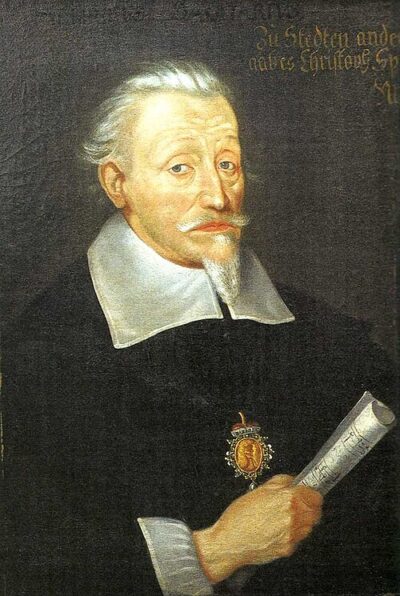
Cantiones sacrae
Cantiones sacrae is a collection of sacred music by Schütz. It came out in 1625.
- Released
- 1625
- Genre
- religious music
- Country of origin
- Germany
All 7 facts, and where they come from
Facts
7 facts · 0 confirmed by two sources · 0 cited · 7 from one source
Where this comes from
Papalocal keeps its own record. It started from these sources; what each one said is kept here as it was copied, so a change on their side never changes this page by itself. Tap one to read its version.
What Wikidata says · copied November 17, 2026 · revision 2569895608
- Described as
- collection of sacred music by Schütz
- What it is
- musical work/composition
- Music by
- Heinrich Schütz
- Genre
- religious music; choral music
- Released
- 1625
- Language
- Latin
- Country of origin
- Germany
- Wikipedias with a page
- 2
Wikidata item Q2936612 (wikidata.org/wiki/Q2936612), public domain (CC0). Copied 2026-11-17.
What Wikipedia says · copied November 17, 2026 · revision 1372673851
Cantiones sacrae (literally: Sacred chants), Op. 4, is a collection of forty pieces of vocal sacred music on Latin texts, composed by Heinrich Schütz and first published in 1625. The pieces have individual numbers 53 to 93 in the Schütz-Werke-Verzeichnis (SWV), the catalogue of his works. The general title Cantiones sacrae was common at the time and was used by many composers, including Palestrina, Byrd and Tallis (1589 and 1591) and Hans Leo Hassler (1591).
From the Wikipedia article “Cantiones sacrae (Schütz)” (en.wikipedia.org/wiki/Cantiones_sacrae_(Schütz)), by its contributors, under CC BY-SA 4.0 (creativecommons.org/licenses/by-sa/4.0/). Copied 2026-11-17; not changed.
Confirmed Two sources agree. Cited One source, and it names where it got it. One source One source, without a reference of its own. Sources disagree The sources disagree. We show the best-supported value and keep theirs below.