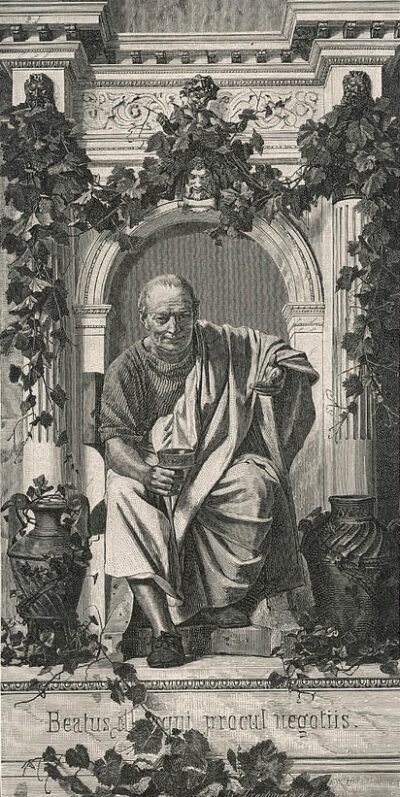
Carmen saeculare
Carmen saeculare is a hymn by Horace.
- Written by
- Horace
- Genre
- poetry
- Country of origin
- Roman Empire
All 5 facts, and where they come from
Facts
5 facts · 0 confirmed by two sources · 1 cited · 4 from one source
Where this comes from
Papalocal keeps its own record. It started from these sources; what each one said is kept here as it was copied, so a change on their side never changes this page by itself. Tap one to read its version.
What Wikidata says · copied November 17, 2026 · revision 2564616916
- Described as
- hymn by Horace
- Other names
- Secular Hymn, Hor. Carm.
- What it is
- literary work
- Written by
- Horace
- Genre
- poetry
- Language
- Latin · 1 reference
- Country of origin
- Roman Empire · 1 reference
- Wikipedias with a page
- 15
Wikidata item Q1246446 (wikidata.org/wiki/Q1246446), public domain (CC0). Copied 2026-11-17.
What Wikipedia says · copied November 17, 2026 · revision 1384740468
The Carmen saeculare ("Song of the ages") is a Latin hymn written by Horace and commissioned by Augustus. It was sung by a choir of girls and boys at the secular games in 17 BC. It is written in Sapphic meter and follows the themes of the poets of the day, in particular Vergil.
The poem is a prayer dedicated to Diana and Apollo, and secondarily to Jupiter and Juno. It asks for their protection of Rome and its laws, as well as their favor in granting descendants to the Roman people. For Horace, prosperity and wealth returned to the city after Augustus took power and established peace. Making references to Aeneas and Romulus, he celebrates the reign of Augustus, which brought in a new era and ensured the future of Rome.
This poem marked Horace's return to lyrical poetry and raised him to the level of national poet.
From the Wikipedia article “Carmen Saeculare” (en.wikipedia.org/wiki/Carmen_Saeculare), by its contributors, under CC BY-SA 4.0 (creativecommons.org/licenses/by-sa/4.0/). Copied 2026-11-17; not changed.
Confirmed Two sources agree. Cited One source, and it names where it got it. One source One source, without a reference of its own. Sources disagree The sources disagree. We show the best-supported value and keep theirs below.
Picture: Wikimedia Commons: Quinto Orazio Flacco.jpg · See Commons file page