Carnot's theorem
Carnot's theorem is a theorem about the sum of the distances from the circumcenter to the sides of an arbitrary triangle.
All 2 facts, and where they come from
Facts
2 facts · 0 confirmed by two sources · 0 cited · 2 from one source
Where this comes from
Papalocal keeps its own record. It started from these sources; what each one said is kept here as it was copied, so a change on their side never changes this page by itself. Tap one to read its version.
What Wikidata says · copied November 17, 2026 · revision 2564620332
- Described as
- theorem about the sum of the distances from the circumcenter to the sides of an arbitrary triangle
- What it is
- theorem
- Named after
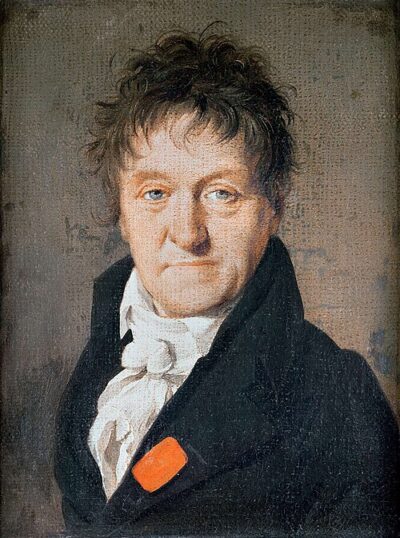
- Lazare Carnot
- Wikipedias with a page
- 24
Wikidata item Q1141747 (wikidata.org/wiki/Q1141747), public domain (CC0). Copied 2026-11-17.
What Wikipedia says · copied November 17, 2026 · revision 1382042432
In Euclidean geometry, Carnot's theorem (English: kar-NOH, French: [kaʁno]) states that the sum of the signed distances from the circumcenter D to the sides of an arbitrary triangle ABC is
DF+DG+DH=R+r,
where r is the inradius and R is the circumradius of the triangle. Here the sign of the distances is taken to be negative if and only if the open line segment DX (for X equal to F, G, or H) lies completely outside the triangle. For example, in the diagram, DF is negative and both DG and DH are positive. The theorem can be viewed as saying that the sum of the actual-distance trilinear coordinates of the circumcenter is R+r.
The theorem is named after Lazare Carnot (1753–1823). It is used in a proof of the Japanese theorem for concyclic polygons.
From the Wikipedia article “Carnot's theorem (inradius, circumradius)” (en.wikipedia.org/wiki/Carnot's_theorem_(inradius,_circumradius)), by its contributors, under CC BY-SA 4.0 (creativecommons.org/licenses/by-sa/4.0/). Copied 2026-11-17; not changed.
Confirmed Two sources agree. Cited One source, and it names where it got it. One source One source, without a reference of its own. Sources disagree The sources disagree. We show the best-supported value and keep theirs below.
Picture: Wikimedia Commons: Teorema de Carnot.svg · See Commons file page