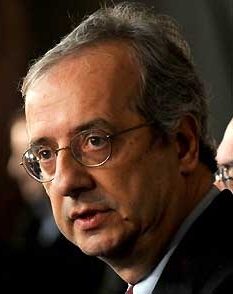
Chamber of Deputies of Italy
Chamber of Deputies of Italy is a lower house of the Italian Parliament. It was founded in 1948. Its headquarters are in Rome.
- Founded
- January 1, 1948
- Headquarters
- Rome
- Country
- Italy
All 9 facts, and where they come from
Facts
9 facts · 0 confirmed by two sources · 2 cited · 7 from one source
Where this comes from
Papalocal keeps its own record. It started from these sources; what each one said is kept here as it was copied, so a change on their side never changes this page by itself. Tap one to read its version.
What Wikidata says · copied November 17, 2026 · revision 2551537297
- Described as
- lower house of the Italian Parliament
- Other names
- Italian Chamber of Deputies, Camera dei Deputati, Chamber of Deputies of Republic of Italy
- What it is
- chamber of deputies
- Comes after
- Chamber of Fasces and Corporations
- Founded
- January 1, 1948
- Headquarters
- Palazzo Montecitorio
- Country
- Italy
- Chair
- Lorenzo Fontana (2022–) · 1 reference
- Field
- legislature · 1 reference
- Office of
- Italy
- Official website
- http://www.camera.it
- Wikipedias with a page
- 42
Wikidata item Q841424 (wikidata.org/wiki/Q841424), public domain (CC0). Copied 2026-11-17.
What Wikipedia says · copied November 17, 2026 · revision 1386089489
The Chamber of Deputies (Italian: Camera dei deputati) is the lower house of the bicameral Italian Parliament, the upper house being the Senate of the Republic. The two houses together form a perfect bicameral system, meaning they perform identical functions, but do so separately. The Chamber of Deputies has 400 seats, of which 392 are elected from Italian constituencies, and 8 from Italian citizens living abroad. Deputies are styled The Honourable (Italian: Onorevole) and meet at Palazzo Montecitorio.
From the Wikipedia article “Chamber of Deputies (Italy)” (en.wikipedia.org/wiki/Chamber_of_Deputies_(Italy)), by its contributors, under CC BY-SA 4.0 (creativecommons.org/licenses/by-sa/4.0/). Copied 2026-11-17; not changed.
Confirmed Two sources agree. Cited One source, and it names where it got it. One source One source, without a reference of its own. Sources disagree The sources disagree. We show the best-supported value and keep theirs below.