Chandigarh Capitol Complex
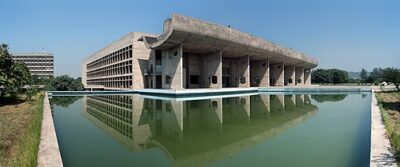
Chandigarh Capitol Complex is an UNESCO World Heritage Site in Chandigarh capital region, India. It came out in 1953.
- Came out
- 1953
All 5 facts, and where they come from
Facts
5 facts · 0 confirmed by two sources · 1 cited · 4 from one source
Where this comes from
Papalocal keeps its own record. It started from these sources; what each one said is kept here as it was copied, so a change on their side never changes this page by itself. Tap one to read its version.
What Wikidata says · copied November 17, 2026 · revision 2535866148
- Described as
- UNESCO World Heritage Site in Chandigarh capital region, India
- What it is
- architectural ensemble
- Came out
- 1953
- Located in
- Chandigarh
- Country
- India · 1 reference
- Official website
- http://capitolcomplex.gov.in/
- Wikipedias with a page
- 23
Wikidata item Q25931399 (wikidata.org/wiki/Q25931399), public domain (CC0). Copied 2026-11-17.
What Wikipedia says · copied November 17, 2026 · revision 1376254863
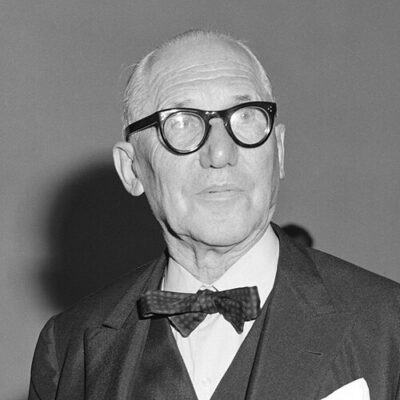
Chandigarh Capitol Complex is a government compound designed by Swiss-French architect Le Corbusier and his co-workers in Chandigarh, India.
It comprises three buildings: the Palace of Assembly, Secretariat Building and the High Court plus four monuments (Open Hand Monument, Geometric Hill, Tower of Shadows and the Martyrs Monument) and a lake.
Spreading over an area of around 100 ha (0.39 sq mi), it is classified as a UNESCO World Heritage Site, along with sixteen other works by Le Corbusier for its contribution to the development of modernist architecture.
Le Corbusier designed the "Tower of Shadows", an experimental construction, in such a way that not a single ray of sun enters it from any angle. The north side of this tower remains open because the sun never shines from this direction. Le Corbusier used the same principle for other Capitol Complex buildings as well.
From the Wikipedia article “Chandigarh Capitol Complex” (en.wikipedia.org/wiki/Chandigarh_Capitol_Complex), by its contributors, under CC BY-SA 4.0 (creativecommons.org/licenses/by-sa/4.0/). Copied 2026-11-17; not changed.
Confirmed Two sources agree. Cited One source, and it names where it got it. One source One source, without a reference of its own. Sources disagree The sources disagree. We show the best-supported value and keep theirs below.
Picture: duncid, via Wikimedia Commons · CC BY-SA 2.0