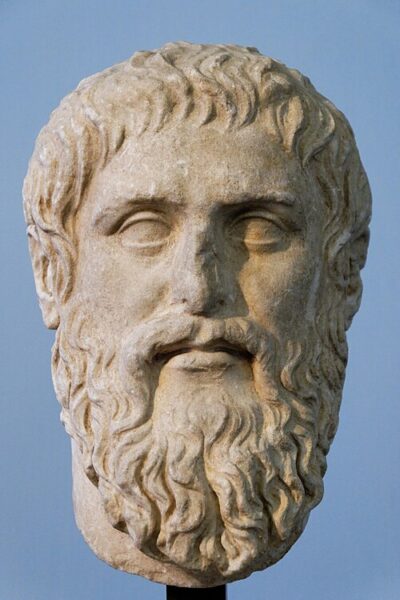
Charmides
Charmides is a work of Plato. It is part of Platonic dialogue.
- Written by
- Plato
- Genre
- Socratic dialogue
All 6 facts, and where they come from
Facts
6 facts · 0 confirmed by two sources · 0 cited · 6 from one source
Where this comes from
Papalocal keeps its own record. It started from these sources; what each one said is kept here as it was copied, so a change on their side never changes this page by itself. Tap one to read its version.
What Wikidata says · copied November 17, 2026 · revision 2555874090
- Described as
- work of Plato
- Other names
- Plat. Charm.
- What it is
- written work; Platonic dialogue
- Written by
- Plato
- Genre
- Socratic dialogue
- Language
- Ancient Greek
- Part of the series
- Platonic dialogue · 1 reference
- Wikipedias with a page
- 29
Wikidata item Q781206 (wikidata.org/wiki/Q781206), public domain (CC0). Copied 2026-11-17.
What Wikipedia says · copied November 17, 2026 · revision 1335528273
The Charmides (; Ancient Greek: Χαρμίδης) is a dialogue of Plato, in which Socrates engages a handsome and popular boy named Charmides in a conversation about the meaning of sophrosyne, a Greek word usually translated into English as "temperance," "self-control," or "restraint." When the boy is unable to satisfy him with an answer, he next turns to the boy's mentor Critias. In the dialogue, Charmides and then later Critias champion that Temperance is "doing one's own work" but Socrates derides this as vague. The definition given next of "knowing oneself" seems promising but the question is then raised if something can even have the knowledge of itself as a base. As is typical with Platonic early dialogues, the two never arrive at a completely satisfactory definition, but the discussion nevertheless raises many important points. The Charmides is one of Plato's most homoerotic dialogues. Socrates admires Charmides' beauty at the beginning of the dialogue, saying "I saw inside his cloak and caught on fire and was quite beside myself."
From the Wikipedia article “Charmides (dialogue)” (en.wikipedia.org/wiki/Charmides_(dialogue)), by its contributors, under CC BY-SA 4.0 (creativecommons.org/licenses/by-sa/4.0/). Copied 2026-11-17; not changed.
Confirmed Two sources agree. Cited One source, and it names where it got it. One source One source, without a reference of its own. Sources disagree The sources disagree. We show the best-supported value and keep theirs below.
Picture: Wikimedia Commons: Charmides beginning. Clarke Plato.jpg · See Commons file page