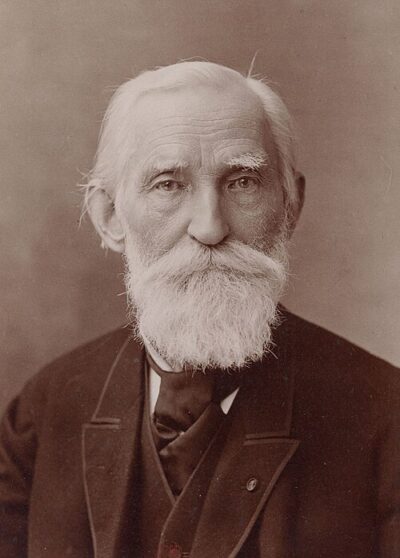
Chebyshev distance
Chebyshev distance is a distance between vectors defined by the maximum difference between coordinates.
All 4 facts, and where they come from
Facts
4 facts · 0 confirmed by two sources · 0 cited · 4 from one source
Where this comes from
Papalocal keeps its own record. It started from these sources; what each one said is kept here as it was copied, so a change on their side never changes this page by itself. Tap one to read its version.
What Wikidata says · copied November 17, 2026 · revision 2555817504
- Described as
- distance between vectors defined by the maximum difference between coordinates
- Other names
- Tchebychev distance, chessboard distance, maximum metric
- What it is
- metric function; norm; Minkowski distance
- Named after
- Pafnuty Chebyshev
- Wikipedias with a page
- 22
Wikidata item Q573482 (wikidata.org/wiki/Q573482), public domain (CC0). Copied 2026-11-17.
What Wikipedia says · copied November 17, 2026 · revision 1374976280
In mathematics, Chebyshev distance (or Tchebychev distance), maximum metric, or L∞ metric is a metric defined on a real coordinate space where the distance between two points is the greatest of their differences along any coordinate dimension. It is named after Pafnuty Chebyshev.
It is also known as chessboard distance, since in the game of chess the minimum number of moves needed by a king to go from one square on a chessboard to another equals the Chebyshev distance between the centers of the squares, if the squares have side length one, as represented in 2-D spatial coordinates with axes aligned to the edges of the board. For example, the Chebyshev distance between f6 and e2 equals 4.
From the Wikipedia article “Chebyshev distance” (en.wikipedia.org/wiki/Chebyshev_distance), by its contributors, under CC BY-SA 4.0 (creativecommons.org/licenses/by-sa/4.0/). Copied 2026-11-17; not changed.
Confirmed Two sources agree. Cited One source, and it names where it got it. One source One source, without a reference of its own. Sources disagree The sources disagree. We show the best-supported value and keep theirs below.