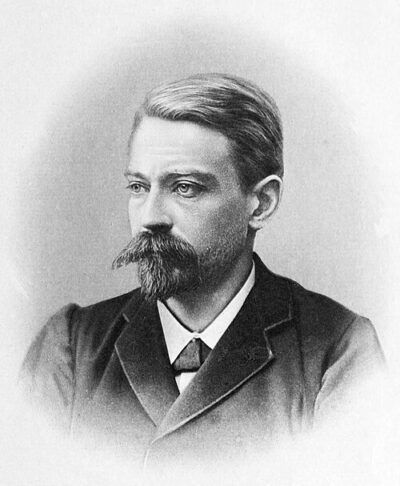
Chebyshev–Markov–Stieltjes inequalities
Chebyshev–Markov–Stieltjes inequalities is a mathematical theorem.
All 3 facts, and where they come from
Facts
3 facts · 0 confirmed by two sources · 0 cited · 3 from one source
Where this comes from
Papalocal keeps its own record. It started from these sources; what each one said is kept here as it was copied, so a change on their side never changes this page by itself. Tap one to read its version.
What Wikidata says · copied November 18, 2026 · revision 2302993259
- Described as
- mathematical theorem
- What it is
- theorem
- Named after
- Pafnuty Chebyshev; Andrey Markov
- Wikipedias with a page
- 2
Wikidata item Q5089020 (wikidata.org/wiki/Q5089020), public domain (CC0). Copied 2026-11-18.
What Wikipedia says · copied November 18, 2026 · revision 1286472328
In mathematical analysis, the Chebyshev–Markov–Stieltjes inequalities are inequalities related to the problem of moments that were formulated in the 1880s by Pafnuty Chebyshev and proved independently by Andrey Markov and (somewhat later) by Thomas Jan Stieltjes. Informally, they provide sharp bounds on a measure from above and from below in terms of its first moments.
From the Wikipedia article “Chebyshev–Markov–Stieltjes inequalities” (en.wikipedia.org/wiki/Chebyshev–Markov–Stieltjes_inequalities), by its contributors, under CC BY-SA 4.0 (creativecommons.org/licenses/by-sa/4.0/). Copied 2026-11-18; not changed.
Confirmed Two sources agree. Cited One source, and it names where it got it. One source One source, without a reference of its own. Sources disagree The sources disagree. We show the best-supported value and keep theirs below.