Chebyshev polynomial
Chebyshev polynomial is a two sequences of polynomials.
All 2 facts, and where they come from
Facts
2 facts · 0 confirmed by two sources · 0 cited · 2 from one source
Where this comes from
Papalocal keeps its own record. It started from these sources; what each one said is kept here as it was copied, so a change on their side never changes this page by itself. Tap one to read its version.
What Wikidata says · copied November 17, 2026 · revision 2497495430
- Described as
- two sequences of polynomials
- Other names
- Chebyshev polynomials
- What it is
- mathematical concept
- Named after
- Pafnuty Chebyshev
- Wikipedias with a page
- 26
Wikidata item Q619511 (wikidata.org/wiki/Q619511), public domain (CC0). Copied 2026-11-17.
What Wikipedia says · copied November 17, 2026 · revision 1384633194
The Chebyshev polynomials are two sequences of orthogonal polynomials related to the cosine and sine functions, denoted as Tn(x) and Un(x). They can be defined in several equivalent ways, one of which starts with trigonometric functions:
The Chebyshev polynomials of the first kind Tn are defined by
Tn(cosθ)=cos(nθ).
Similarly, the Chebyshev polynomials of the second kind Un are defined by
Un(cosθ)sinθ=sin((n+1)θ).
That these expressions define polynomials in cosθ is not obvious at first sight but can be shown using de Moivre's formula (see below).
The Chebyshev polynomials Tn are polynomials with the largest possible leading coefficient whose absolute value on the interval [−1, 1] is bounded by 1. They are also the "extremal" polynomials for many other properties.
In 1952, Cornelius Lanczos showed that the Chebyshev polynomials are important in approximation theory for the solution of linear systems; the roots of Tn(x), which are also called Chebyshev nodes, are used as matching points for optimizing polynomial interpolation. The resulting interpolation polynomial minimizes Runge's phenomenon and provides an approximation that is close to the best polynomial approximation to a continuous function under the maximum norm, also called the "minimax" criterion. This approximation leads directly to the method of Clenshaw–Curtis quadrature.
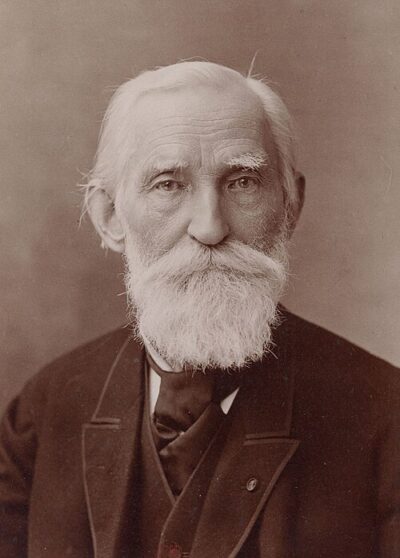
These polynomials were named after Pafnuty Chebyshev. The letter T is used because of the alternative transliterations of the name Chebyshev as Tchebycheff, Tchebyshev (French) or Tschebyschow (German).
From the Wikipedia article “Chebyshev polynomials” (en.wikipedia.org/wiki/Chebyshev_polynomials), by its contributors, under CC BY-SA 4.0 (creativecommons.org/licenses/by-sa/4.0/). Copied 2026-11-17; not changed.
Confirmed Two sources agree. Cited One source, and it names where it got it. One source One source, without a reference of its own. Sources disagree The sources disagree. We show the best-supported value and keep theirs below.