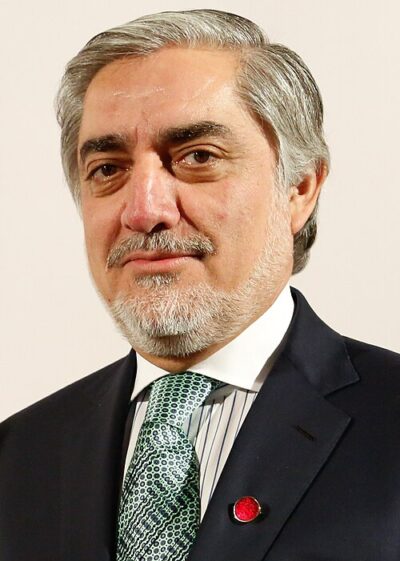
Chief Executive Officer of Afghanistan
Chief Executive Officer of Afghanistan is a position within the Government of Afghanistan. It was created in 2014.
- Office of
- Afghanistan
- Country
- Afghanistan
- Created
- September 29, 2014
All 4 facts, and where they come from
Facts
4 facts · 0 confirmed by two sources · 0 cited · 4 from one source
Where this comes from
Papalocal keeps its own record. It started from these sources; what each one said is kept here as it was copied, so a change on their side never changes this page by itself. Tap one to read its version.
What Wikidata says · copied November 17, 2026 · revision 1932501607
- Described as
- a position within the Government of Afghanistan
- What it is
- public office
- Created
- September 29, 2014
- Country
- Afghanistan
- Office of
- Afghanistan
- Wikipedias with a page
- 14
Wikidata item Q20204943 (wikidata.org/wiki/Q20204943), public domain (CC0). Copied 2026-11-17.
What Wikipedia says · copied November 17, 2026 · revision 1373635977
The chief executive of the Islamic Republic of Afghanistan was a position within the Government of Afghanistan that served as head of government of Afghanistan. The extra-constitutional post was created in September 2014 following the disputes that arose after the 2014 Afghan presidential election when both Ashraf Ghani and Abdullah Abdullah, who was the only one held that post, claimed victory in that election. As part of a National Unity Agreement, it was agreed that Ashraf Ghani would assume the presidency and a new post of chief executive of the Islamic Republic of Afghanistan would be created for Abdullah Abdullah.
After his claim as president, disputed with Ghani, this post had remained vacant from 2020 until the Taliban retook power in 2021 after the Islamic Republic collapsed.
From the Wikipedia article “Chief Executive (Afghanistan)” (en.wikipedia.org/wiki/Chief_Executive_(Afghanistan)), by its contributors, under CC BY-SA 4.0 (creativecommons.org/licenses/by-sa/4.0/). Copied 2026-11-17; not changed.
Confirmed Two sources agree. Cited One source, and it names where it got it. One source One source, without a reference of its own. Sources disagree The sources disagree. We show the best-supported value and keep theirs below.