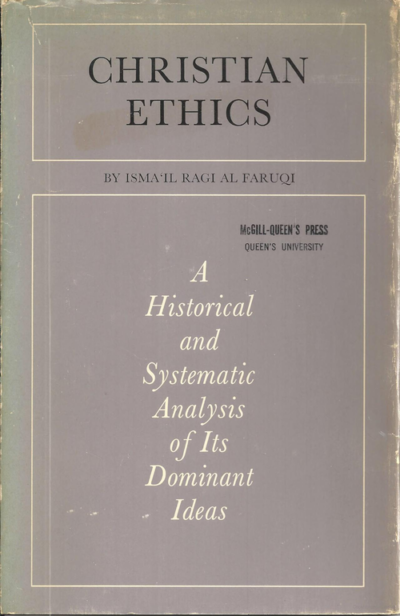
Christian Ethics: A Historical and Systematic Analysis of Its Dominant Ideas
Christian Ethics: A Historical and Systematic Analysis of Its Dominant Ideas is a 1967 book by Dr Isma'il Raji al-Faruqi. It was written by Ismail al-Faruqi.
- Released
- 1967
- Written by
- Ismail al-Faruqi
All 4 facts, and where they come from
Facts
4 facts · 0 confirmed by two sources · 0 cited · 4 from one source
Where this comes from
Papalocal keeps its own record. It started from these sources; what each one said is kept here as it was copied, so a change on their side never changes this page by itself. Tap one to read its version.
What Wikidata says · copied November 16, 2026 · revision 2437258567
- Described as
- 1967 book by Dr Isma'il Raji al-Faruqi
- Other names
- Christian Ethics
- What it is
- publication
- Written by
- Ismail al-Faruqi
- Released
- 1967
- Language
- English
- Wikipedias with a page
- 2
Wikidata item Q127488952 (wikidata.org/wiki/Q127488952), public domain (CC0). Copied 2026-11-16.
What Wikipedia says · copied November 16, 2026 · revision 1384497865
Christian Ethics: A Historical and Systematic Analysis of Its Dominant Ideas (1967) is a book by Ismail al-Faruqi that examines Christian ethical thought in historical and systematic terms. Al-Faruqi writes from a Muslim standpoint and traces the development of the main Christian moral doctrines, arguing that several of them depart from the teachings of Jesus through what he identifies as theological inconsistency and the absorption of non-Semitic ideas.
The book argues for an ethical framework grounded in reason. It was among the earliest sustained Muslim critiques of Christian dogma and ethics in the modern era, and it drew responses from both Muslim and Christian scholars working in comparative religion and interfaith dialogue.
From the Wikipedia article “Christian Ethics (book)” (en.wikipedia.org/wiki/Christian_Ethics_(book)), by its contributors, under CC BY-SA 4.0 (creativecommons.org/licenses/by-sa/4.0/). Copied 2026-11-16; not changed.
Confirmed Two sources agree. Cited One source, and it names where it got it. One source One source, without a reference of its own. Sources disagree The sources disagree. We show the best-supported value and keep theirs below.
Picture: Ibn Juferi, via Wikimedia Commons · Public domain