
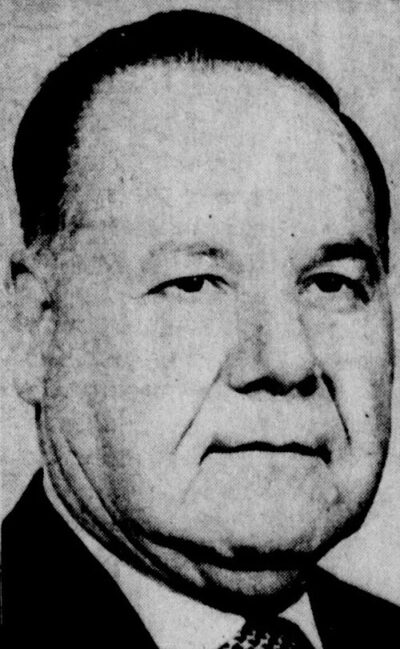
Ismail al-Faruqi
Ismail al-Faruqi was a Palestinian-American Muslim philosopher and scholar. Born January 1, 1921, in Jaffa. Died May 27, 1986, in Wyncote. Known for The Cultural Atlas of Islam, Christian Ethics: A Historical and Systematic Analysis of Its Dominant Ideas and 'Urubah and Religion: A Study of the Fundamental Ideas of Arabism and of Islam as its Highest Moment of Consciousness. Educated at Harvard University and Al-Azhar University.
Facts
28 facts · 2 confirmed by two sources · 13 cited · 13 from one source
Where this comes from
Papalocal keeps its own record. It started from these sources; what each one said is kept here as it was copied, so a change on their side never changes this page by itself. Tap one to read its version.
What Wikidata says · copied November 13, 2026 · revision 2551427999
- Described as
- Palestinian-American Muslim philosopher and scholar (1921–1986)
- Other names
- Ismail al Faruqi, Isma'il Ragi al-Faruqi, Isma‘il Raji al-Faruqi, Isma‘il R. al-Faruqi, Isma'il al Faruqi, Isma’il al Faruqi, Ismael Faruki, Faruqi, Ismaʻil Ragi A., Faruqi, Ismaʼil R. Al-
- Born
- January 1, 1921 · 2 references
- Died
- May 27, 1986 · 1 reference
- Born in
- Jaffa · 2 references
- Died in
- Wyncote · 1 reference
- Buried in
- Forest Hills Memorial Park
- Cause of death
- stabbing · 1 reference
- Citizen of
- United States; Mandatory Palestine
- Occupation
- philosopher · 1 reference; university teacher · 1 reference
- Worked for
- Temple University (1968–1986) · 1 reference; McGill University (1958–1961) · 2 references; Syracuse University (1964–1967) · 2 references; Institute of Islamic Research (1961–1963); University of Chicago (1964–1967)
- Education
- Harvard University (1950–1951); Al-Azhar University (1954–1958) · 1 reference; Indiana University Bloomington (1951–1952); American University of Beirut (1949–)
- Known for
- The Cultural Atlas of Islam · 1 reference; Christian Ethics: A Historical and Systematic Analysis of Its Dominant Ideas · 1 reference; 'Urubah and Religion: A Study of the Fundamental Ideas of Arabism and of Islam as its Highest Moment of Consciousness · 1 reference; Al-Tawhid: Its Implications for Thought and Life; Islam and the Problem of Israel; Islamization of Knowledge: General Principles and Work Plan; Trialogue of the Abrahamic Faiths
- Spouse
- Lois Lamya al-Faruqi · 2 references
- Religion
- Islam
- Wikipedias with a page
- 52
Wikidata item Q3595661 (wikidata.org/wiki/Q3595661), public domain (CC0). Copied November 13, 2026.
What Wikipedia says · copied November 13, 2026 · revision 1384677110
Ismaʿil Raji al-Faruqi (Arabic: إسماعيل راجي الفاروقي, romanized: Ismāʿīl Rājī al-Fārūqī, pronounced [ʔis.maːˈʕiːl raːˈʤiː ʔal.faːˈruː.qiː] ; January 1, 1921 – May 27, 1986) was a Palestinian-American Muslim philosopher and scholar of religion. He contributed significantly to Islamic studies, ethics, and interfaith dialogue, and is best known for pioneering the Islamization of knowledge and articulating tawhid (monotheism) as a comprehensive worldview. He proposed a model of meta-religion based on shared ethical values and the universal concept of divine unity.
Following his early education in Jaffa, al-Faruqi studied philosophy and theology at the American University of Beirut, Indiana University, and Al-Azhar University in Cairo. He taught at McGill University in Canada, then in Pakistan, and later at Syracuse University, where he produced the Historical Atlas of the Religions of the World (1974), a widely referenced work. He subsequently joined Temple University, where he founded and chaired the Islamic Studies program. A prolific author, he published over 100 scholarly articles and 25 books, including Christian Ethics: A Historical and Systematic Analysis of Its Dominant Ideas (1967) and Al-Tawhid: Its Implications for Thought and Life (1982). He also co-founded the International Institute of Islamic Thought (IIIT) and played an active role in interfaith and Muslim educational initiatives.
In May 1986, al-Faruqi and his wife, Lois Lamya al-Faruqi, were murdered in their home in Wyncote, Pennsylvania. Their deaths drew international attention and were widely mourned across academic and interfaith communities. His legacy endures through his writings, institutions, and influence on Islamic intellectual reform.
- Born, in its opening lines
- January 1, 1921
- Died, in its opening lines
- May 27, 1986
From the Wikipedia article “Ismail al-Faruqi” (en.wikipedia.org/wiki/Ismail_al-Faruqi), by its contributors, under CC BY-SA 4.0 (creativecommons.org/licenses/by-sa/4.0/). Copied November 13, 2026; not changed.
Confirmed Two sources agree. Cited One source, and it names where it got it. One source One source, without a reference of its own. Sources disagree The sources disagree. We show the best-supported value and keep theirs below.
