
Civic Forum
Civic Forum is a Czech political movement established during the Velvet Revolution in 1989. It was founded by Václav Havel. Its headquarters are in Prague.
- Country
- Czechoslovakia
- Founded
- 1989
All 7 facts, and where they come from
Facts
7 facts · 0 confirmed by two sources · 0 cited · 7 from one source
Where this comes from
Papalocal keeps its own record. It started from these sources; what each one said is kept here as it was copied, so a change on their side never changes this page by itself. Tap one to read its version.
What Wikidata says · copied November 17, 2026 · revision 2553154444
- Described as
- Czech political movement established during the Velvet Revolution in 1989
- What it is
- political party; political movement
- Founded
- 1989
- Ended
- 1991 · 1 reference
- Founded by
- Václav Havel · 1 reference
- Headquarters
- Prague · 1 reference
- Country
- Czechoslovakia
- Wikipedias with a page
- 19
Wikidata item Q1755236 (wikidata.org/wiki/Q1755236), public domain (CC0). Copied 2026-11-17.
What Wikipedia says · copied November 17, 2026 · revision 1337403518
The Civic Forum (Czech: Občanské fórum, OF) was a political movement in the Czech part of Czechoslovakia, established during the Velvet Revolution in 1989. The corresponding movement in Slovakia was called Public Against Violence (Slovak: Verejnosť proti násiliu – VPN).
The Civic Forum's purpose was to unify the dissident forces in Czechoslovakia and to overthrow the Communist regime. In this, they succeeded when the Communists gave up power in November 1989 after only 10 days of protests. Playwright Václav Havel, its leader and founder, was elected president on 29 December 1989. Although the Forum did not have a clear political strategy beyond the June 1990 elections, it campaigned successfully in March and April 1990 during the first free elections in Czechoslovakia since 1946. Those elections garnered Civic Forum 36 percent of the vote, the highest that a Czechoslovak party ever obtained in a free election. This netted it 68 seats in the Chamber of Deputies; combined with Public Against Violence's 19 seats, it commanded a strong majority.
The Civic Forum had a very loose structure, and most of its (self-appointed) leaders came from Prague-based members of the Charter 77 dissident movement. In December 1989, Jan Urban became the Forum's chairman after Havel's election as president. Urban served until June 1990, when he resigned, stating he did not want a rift between the organization and the president. On 16 October 1990, Václav Klaus was elected its new chairman. Klaus's policies were opposed by other leading figures within the Forum and party unity soon vanished.
At the Civic Forum congress in January 1991, the movement divided. The more right wing members, led by Klaus, declared that they would form an independent party, the Civic Democratic Party (Občanská demokratická strana), with a clearer program advocating a free market. The party elected Klaus as its chairman in February 1991. The more centrist members of Civic Forum, led by federal minister of foreign affairs Jiří Dienstbier, formed the Civic Movement (Občanské hnutí). Klaus stated that the two parties would rule as a coalition until the 1992 elections. However, by July 1991 Klaus declared the inter-party cooperation over. The Civic Democratic Party was victorious in the elections of 1992 while the Civic Movement failed to reach the 5% threshold to enter parliament and eventually disappeared.
From the Wikipedia article “Civic Forum” (en.wikipedia.org/wiki/Civic_Forum), by its contributors, under CC BY-SA 4.0 (creativecommons.org/licenses/by-sa/4.0/). Copied 2026-11-17; not changed.
Confirmed Two sources agree. Cited One source, and it names where it got it. One source One source, without a reference of its own. Sources disagree The sources disagree. We show the best-supported value and keep theirs below.
People connected 5
Party members
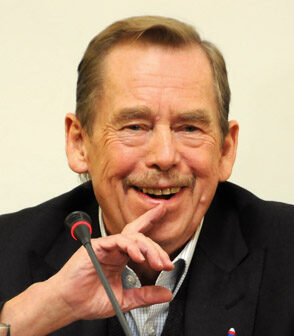 Václav Havel (1989–1991)Czech statesman, playwright, and former dissident, the last president of Czechoslovakia and the first president of the Czech Republic (1936–2011)
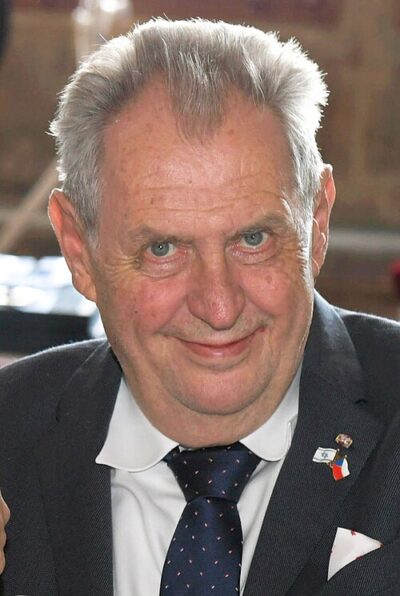 Miloš Zeman (1990–1991)Czech politician, president of the Czech Republic from 2013 to 2023
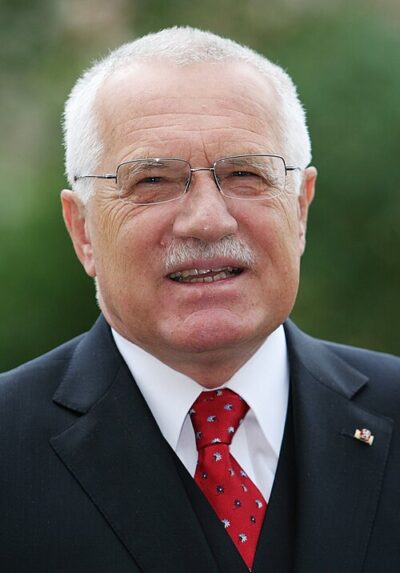 Václav Klaus (1989–1991)President of the Czech Republic from 2003 to 2013
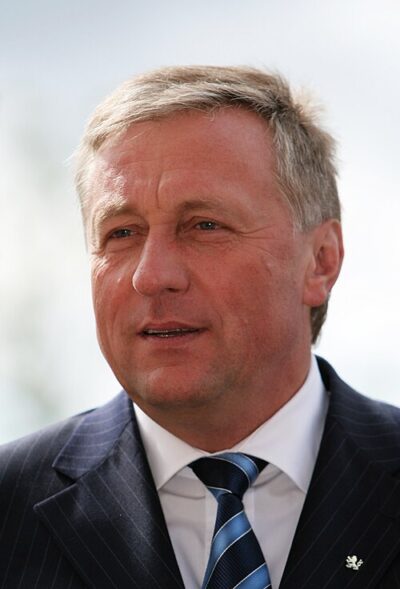 Mirek Topolánek (1989)Czech politician
 Vladimír Špidla (1989)Czech politician
