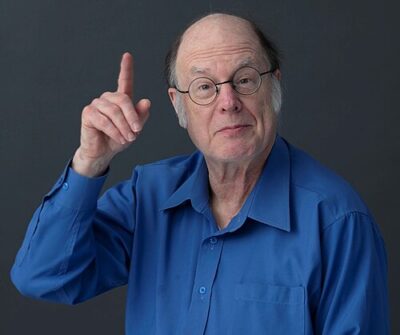
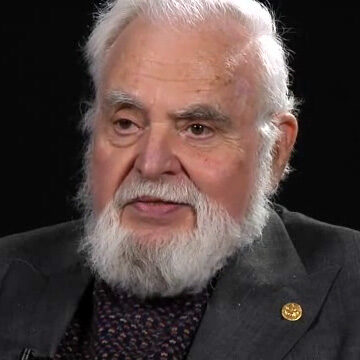
Claude E. Shannon Award
Claude E. Shannon Award is an IEEE award. It was created in 1972. It is given by the Institute of Electrical and Electronics Engineers.
- Country
- internationality
- Created
- 1972
All 7 facts, and where they come from
Facts
7 facts · 0 confirmed by two sources · 0 cited · 7 from one source
Where this comes from
Papalocal keeps its own record. It started from these sources; what each one said is kept here as it was copied, so a change on their side never changes this page by itself. Tap one to read its version.
What Wikidata says · copied November 16, 2026 · revision 2513333982
- Described as
- IEEE award
- Other names
- Shannon Award
- What it is
- science award
- Created
- 1972
- Country
- internationality; United States · 1 reference
- Given by
- Institute of Electrical and Electronics Engineers
- Named after
- Claude Shannon
- Official website
- http://www.itsoc.org/honors/claude-e-shannon-award
- Wikipedias with a page
- 14
Wikidata item Q977835 (wikidata.org/wiki/Q977835), public domain (CC0). Copied 2026-11-16.
What Wikipedia says · copied November 16, 2026 · revision 1362217221
The Claude E. Shannon Award of the IEEE Information Theory Society was created to honor consistent and profound contributions to the field of information theory. Each Shannon Award winner is expected to present a Shannon Lecture at the following IEEE International Symposium on Information Theory. It is a prestigious prize in information theory, covering technical contributions at the intersection of mathematics, communication engineering, and theoretical computer science. It is the highest honor given by the IEEE Information Theory Society and is also regarded as the highest award in the entire field of information theory.
It is named for Claude E. Shannon, who was also the first recipient in 1973.
From the Wikipedia article “Claude E. Shannon Award” (en.wikipedia.org/wiki/Claude_E._Shannon_Award), by its contributors, under CC BY-SA 4.0 (creativecommons.org/licenses/by-sa/4.0/). Copied 2026-11-16; not changed.
Confirmed Two sources agree. Cited One source, and it names where it got it. One source One source, without a reference of its own. Sources disagree The sources disagree. We show the best-supported value and keep theirs below.