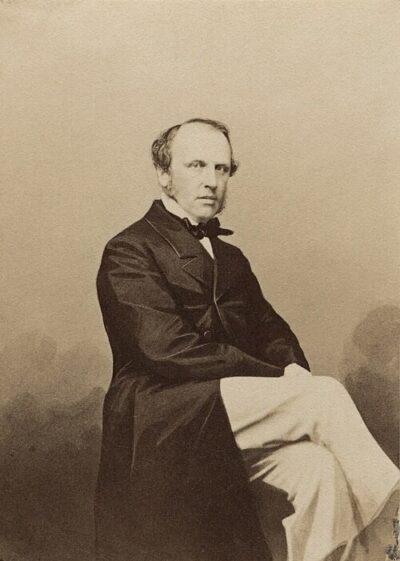
Commissioners of Woods and Forests
Commissioners of Woods and Forests is a Government officials in UK.
All 1 facts, and where they come from
Facts
1 facts · 0 confirmed by two sources · 0 cited · 1 from one source
Where this comes from
Papalocal keeps its own record. It started from these sources; what each one said is kept here as it was copied, so a change on their side never changes this page by itself. Tap one to read its version.
What Wikidata says · copied November 17, 2026 · revision 2570263359
- Described as
- Government officials in UK
- What it is
- position
- Wikipedias with a page
- 2
Wikidata item Q5152877 (wikidata.org/wiki/Q5152877), public domain (CC0). Copied 2026-11-17.
What Wikipedia says · copied November 17, 2026 · revision 1360571359
The Commissioners of Woods, Forests and Land Revenues were established in the United Kingdom in 1810 by merging the former offices of Surveyor General of Woods, Forests, Parks, and Chases and Surveyor General of the Land Revenues of the Crown into a three-man commission. The name of the commission was changed in 1832 to the Commissioners of Woods, Forests, Land Revenues, Works and Buildings.
The hereditary land revenues of the Crown in Scotland, formerly under the management of the Barons of the Exchequer, were transferred to the Commissioners of Woods, Forests, Land Revenues, Works and Buildings and their successors under the Crown Lands (Scotland) Act 1832, the Crown Lands (Scotland) Act 1833 and the Crown Lands (Scotland) Act 1835.
The Crown Lands Act 1851 replaced the commissioners with two separate commissions, the Commissioners of Works and Public Buildings and the Commissioners of Woods, Forests and Land Revenues dividing between them the public and the commercial functions of the Crown lands.
From the Wikipedia article “Commissioners of Woods and Forests” (en.wikipedia.org/wiki/Commissioners_of_Woods_and_Forests), by its contributors, under CC BY-SA 4.0 (creativecommons.org/licenses/by-sa/4.0/). Copied 2026-11-17; not changed.
Confirmed Two sources agree. Cited One source, and it names where it got it. One source One source, without a reference of its own. Sources disagree The sources disagree. We show the best-supported value and keep theirs below.