
Communist Party of Vietnam
Communist Party of Vietnam is a Vietnamese political party. It was founded in 1930 by Ho Chi Minh. Its headquarters are in Ba Đình District. It stands for Ho Chi Minh Thought, socialist patriotism and Vietnamese nationalism.
- Country
- Vietnam
- Founded
- February 3, 1930
- Ideology
- Ho Chi Minh Thought
All 12 facts, and where they come from
Facts
12 facts · 0 confirmed by two sources · 1 cited · 11 from one source
Where this comes from
Papalocal keeps its own record. It started from these sources; what each one said is kept here as it was copied, so a change on their side never changes this page by itself. Tap one to read its version.
What Wikidata says · copied November 17, 2026 · revision 2567175785
- Described as
- Vietnamese political party
- Other names
- Vietnamese Communist Party, CPV, VCP
- What it is
- communist party
- Founded
- February 3, 1930
- Founded by
- Ho Chi Minh · 1 reference
- Headquarters
- Ba Đình District
- Country
- Vietnam; French Indochina
- Chair
- Ho Chi Minh (1951–1969)
- Ideology
- Ho Chi Minh Thought; socialist patriotism; Vietnamese nationalism; Marxism–Leninism · 1 reference
- Official website
- https://dangcongsan.vn
- Wikipedias with a page
- 59
Wikidata item Q427325 (wikidata.org/wiki/Q427325), public domain (CC0). Copied 2026-11-17.
What Wikipedia says · copied November 17, 2026 · revision 1384476158
The Communist Party of Vietnam (CPV), also known as the Vietnamese Communist Party (VCP), is the sole legal party of the Socialist Republic of Vietnam (SRV). Founded in 1930 by Ho Chi Minh, the CPV dominantly established the government of the Democratic Republic of Vietnam (DRV) before becoming the ruling party in 1954 after the First Indochina War and practically all of Vietnam (SRV) in 1975 after the Vietnam War.
Although it nominally exists alongside the Vietnam Fatherland Front, it maintains a unitary government and has centralized control over the state, military, and media. The supremacy of the CPV is guaranteed by Article 4 of the national constitution. The Vietnamese public generally refer to the CPV as simply "the Party" (Đảng) or "our Party" (Đảng ta).
The CPV is organized on the basis of democratic centralism, a principle conceived by Russian Marxist revolutionary Vladimir Lenin. The highest institution of the CPV is the party's National Congress, which elects the Central Committee (CC). The CC is the supreme organ on party affairs in between party congresses. After a party congress, the CC elects the Politburo and Secretariat, and appoints the general secretary, the highest party office. In between sessions of the CC, the Politburo is the supreme organ on party affairs. However, it can only implement decisions based on the policies which have been approved in advance by either the CC or the party's National Congress. As of 2026, the 14th Politburo has 19 members.
After World War II, the party, operating through its Viet Minh front, overthrew the monarchy and purged its political rivals. During the Cold War, through its power as the ruling party of the Democratic Republic of Vietnam (DRV), it fought against the French Union, the United States, and the Western-aligned State of Vietnam and Republic of Vietnam from 1949 to 1975. The DRV was aligned with the Soviet Union, China, and other Eastern-bloc allies. After taking power in all of Vietnam, the party officially unified the country as the Socialist Republic in 1976. The party had implemented a command economy in North Vietnam and later all of Vietnam since 1954, before introducing economic reforms, known as Đổi Mới, in 1986. The party is currently known for its advocacy of what it calls a "socialist-oriented market economy" and Ho Chi Minh Thought.
While continuing to officially hold to Marxism–Leninism, some independent analysts have argued that the party's ideological framing shifted following the introduction of the Đổi Mới in 1986, moving from a strict emphasis on classical class struggle toward performance-based economic legitimacy. At the 10th National Party Congress in 2006, the CPV formally amended its statutes to allow party members to engage in private business activities, defining its role as representing the interests of "the working class, the working people, and the entire nation". The party continues to uphold Marxism–Leninism, with state-owned enterprises still dominating over the "commanding heights" of the economy through State-Owned Enterprises (SOEs) in strategic sectors such as energy, telecommunications, and banking, alongside a centralized state bureaucracy The CPV maintains fraternal ties with global left-wing movements and regularly attends the annual International Meeting of Communist and Workers' Parties (IMCWP). In 1988, the party became the sole political party in Vietnam when it absorbed its two sister parties, the Socialist Party and the Democratic Party. Domestically and internationally, the party's one-party governance structure faces political opposition from the Vietnamese democracy movement and anti-communists, especially groups among the Vietnamese diaspora.
From the Wikipedia article “Communist Party of Vietnam” (en.wikipedia.org/wiki/Communist_Party_of_Vietnam), by its contributors, under CC BY-SA 4.0 (creativecommons.org/licenses/by-sa/4.0/). Copied 2026-11-17; not changed.
Confirmed Two sources agree. Cited One source, and it names where it got it. One source One source, without a reference of its own. Sources disagree The sources disagree. We show the best-supported value and keep theirs below.
People connected 32
Party members 32
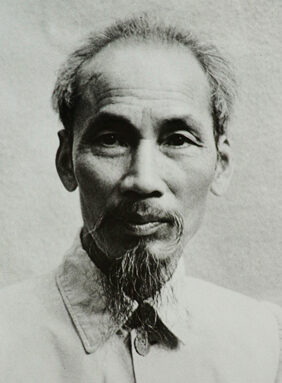 Ho Chi Minh (1951–1969)Vietnamese communist leader, founder of North Vietnam (1890–1969)
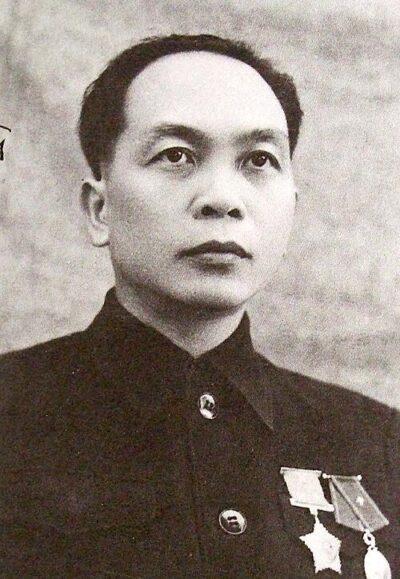 Võ Nguyên Giáp (1931–)Vietnamese general and communist politician (1911–2013)
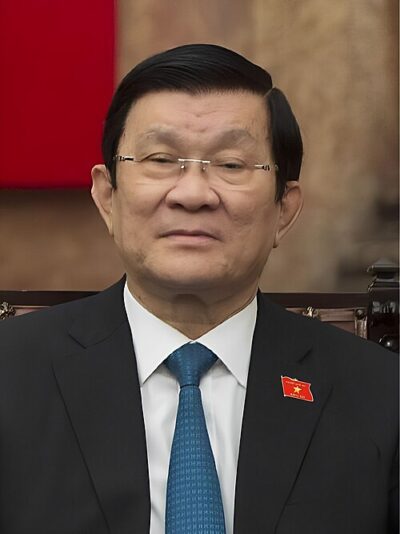 Trương Tấn Sangformer president of Vietnam
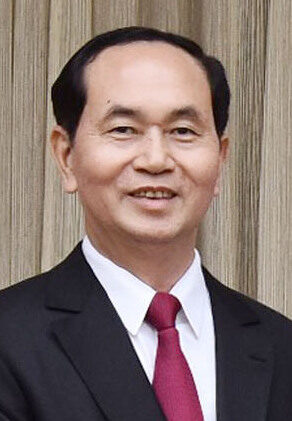 Trần Đại Quang8th President of Vietnam (1956–2018)
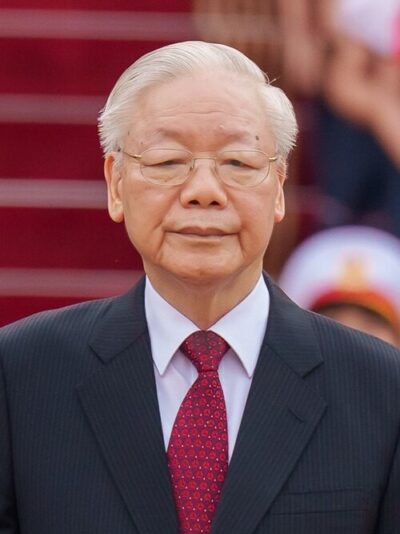 Nguyễn Phú TrọngGeneral Secretary of the Communist Party of Vietnam (top leader) from 2011 to 2024
 Le Duc ThoVietnamese diplomat (1911–1990)
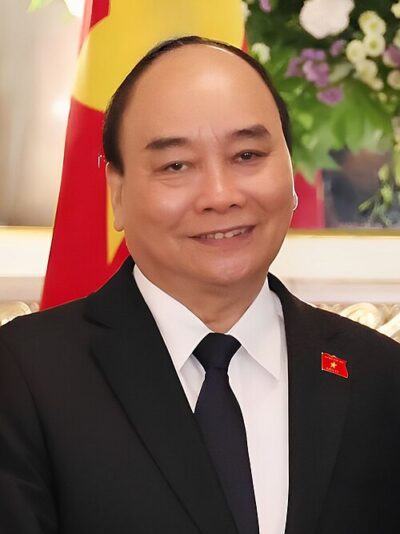 Nguyễn Xuân Phúcformer President of Vietnam
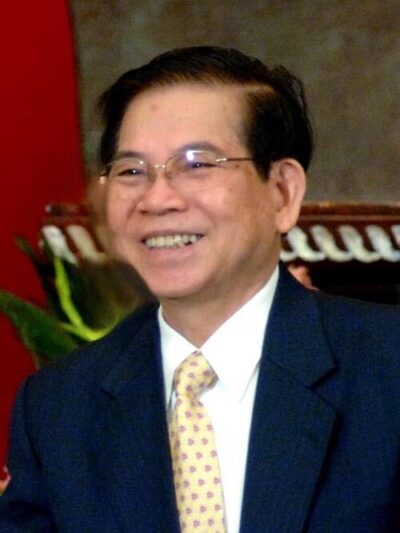 Nguyễn Minh TriếtSixth President of Vietnam (2006-2011)
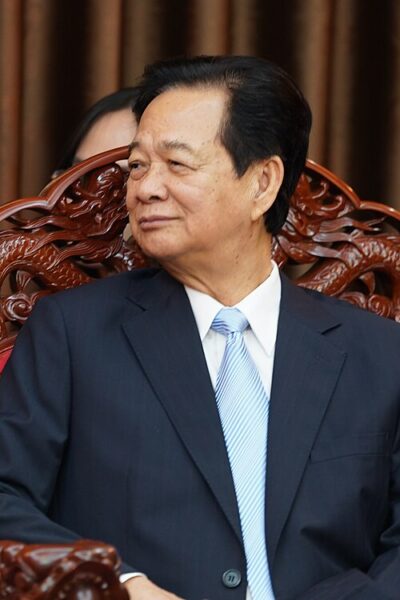 Nguyễn Tấn DũngPrime Minister of Vietnam
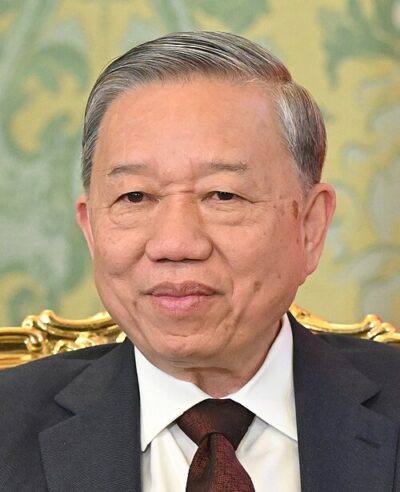 Tô Lâm (1981–)General Secretary of the Communist Party of Vietnam and leader of Vietnam since 2024
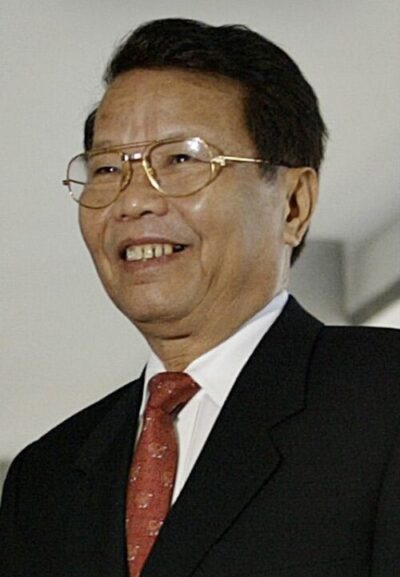 Trần Đức LươngVietnamese politician
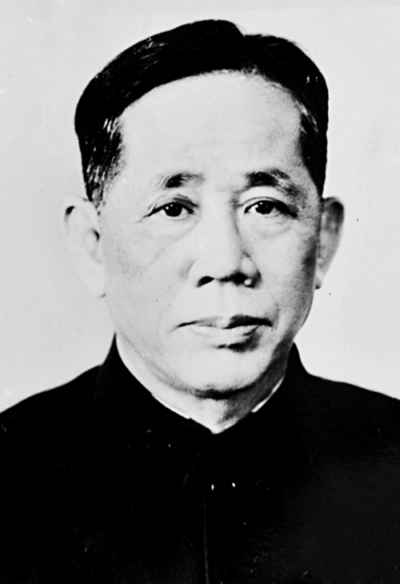 Le DuanGeneral Secretary of the Communist Party of Vietnam (1907-1986)
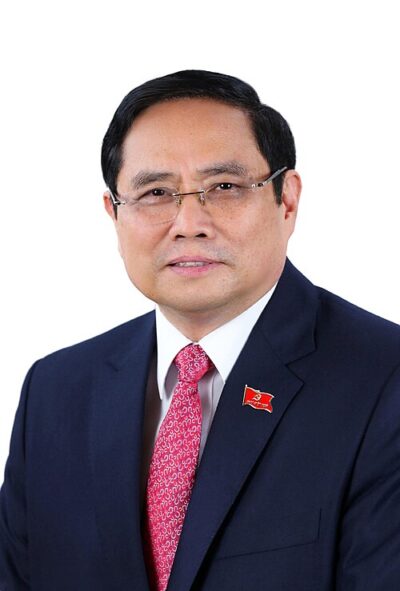 Phạm Minh ChínhVietnamese politician
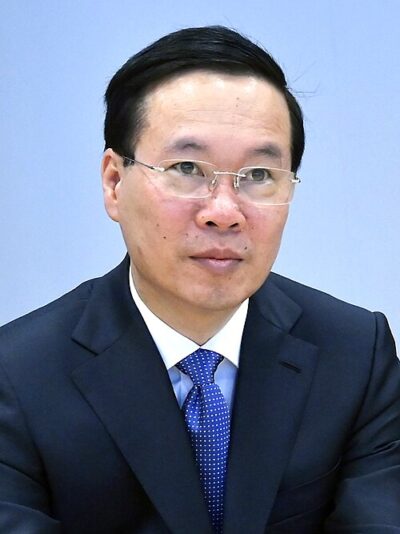 Võ Văn ThưởngPresident of Vietnam (2023–2024)
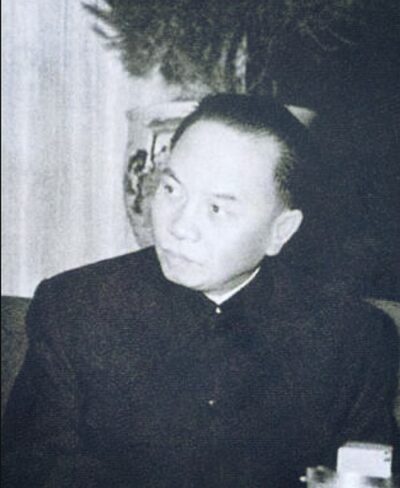 Trường Chinhformer General Secretary of the Communist Party of Vietnam (1907–1988)
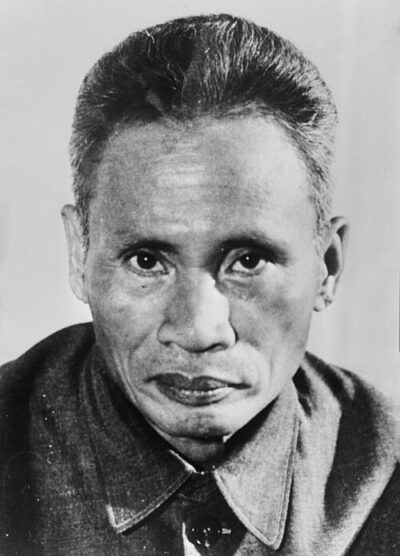 Phạm Văn ĐồngFirst Prime Minister of the Socialist Republic of Vietnam, Prime Minister of the Democratic Republic of Vietnam, diplomat (1906–2000)
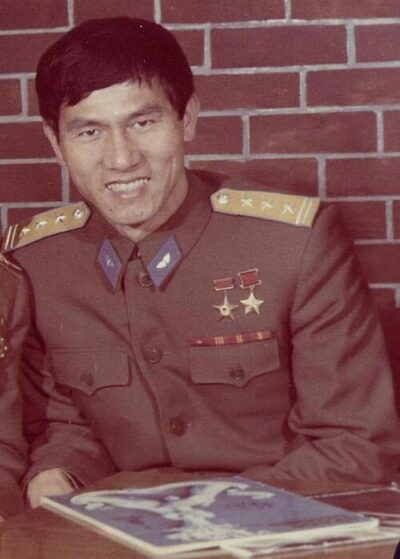 Pham TuanVietnamese astronaut, first Asian in space
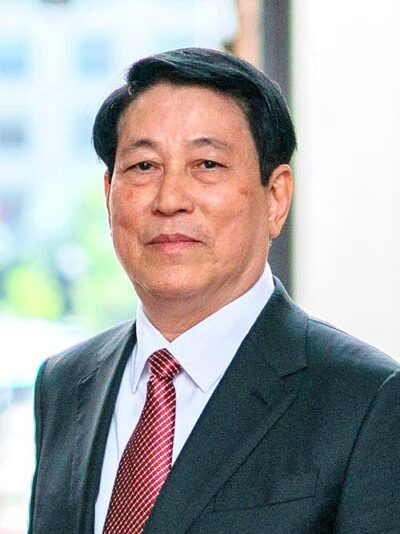 Lương CườngPresident of Vietnam from 2024 to 2026
 Tôn Đức ThắngPresident of Viet Nam (1888 – 1980)
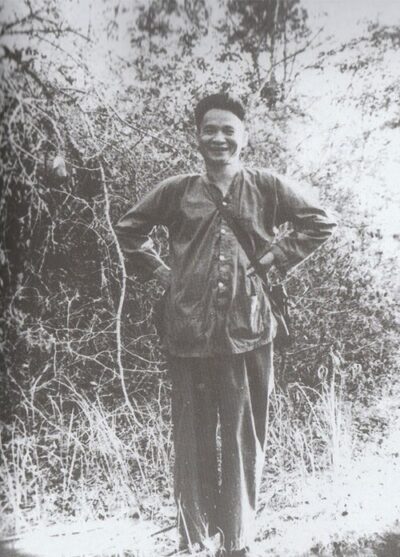 Le Duc Anh4th president of Vietnam (1920-2019)
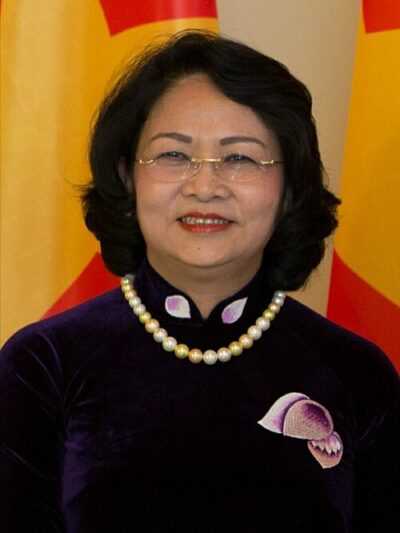 Đặng Thị Ngọc Thịnh (1979–)Vietnamese politician
- VVo Chi CongPresident of Vietnam (1912-2011)
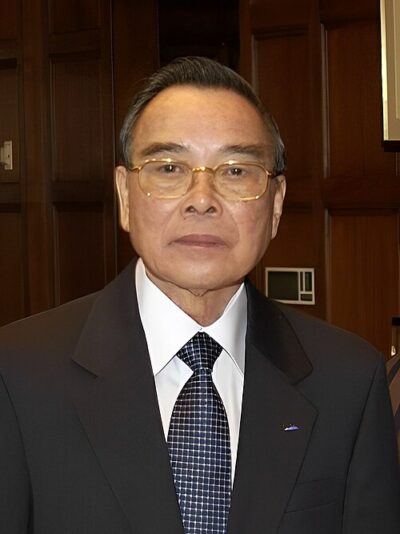 Phan Văn KhảiVietnamese politician (1933-2018)
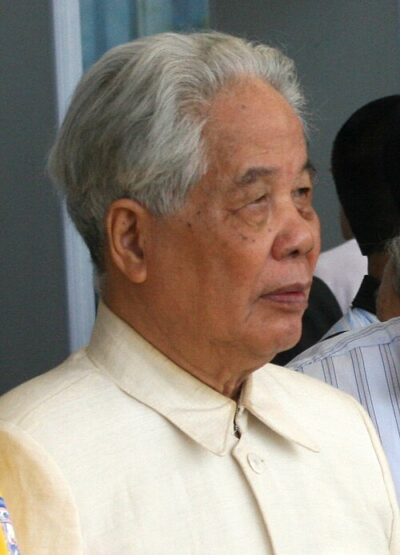 Do Muoiformer General Secretary of the Communist Party of Vietnam (1917–2018)
and 8 more
