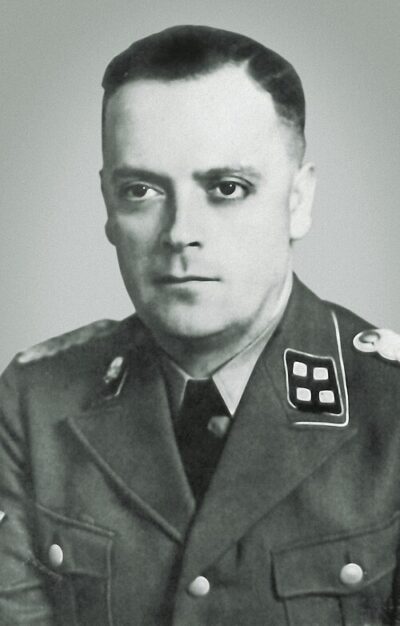
Concentration Camps Inspectorate
Concentration Camps Inspectorate is The central SS administrative and managerial authority for the concentration camps of the Third Reich. It was founded in 1934. Its headquarters are in Sachsenhausen concentration camp.
- Founded
- 1934
- Headquarters
- Sachsenhausen concentration camp
All 6 facts, and where they come from
Facts
6 facts · 0 confirmed by two sources · 1 cited · 5 from one source
Where this comes from
Papalocal keeps its own record. It started from these sources; what each one said is kept here as it was copied, so a change on their side never changes this page by itself. Tap one to read its version.
What Wikidata says · copied November 18, 2026 · revision 2556455530
- Described as
- The central SS administrative and managerial authority for the concentration camps of the Third Reich
- Other names
- Inspectorate of the Concentration Camps
- What it is
- government agency; military unit
- Founded
- 1934
- Ended
- 1945
- Headquarters
- Sachsenhausen concentration camp
- Part of
- SS Main Economic and Administrative Office (1942–) · 1 reference
- Wikipedias with a page
- 15
Wikidata item Q276752 (wikidata.org/wiki/Q276752), public domain (CC0). Copied 2026-11-18.
What Wikipedia says · copied November 18, 2026 · revision 1375742335
The Concentration Camps Inspectorate (CCI) or in German, IKL (Inspektion der Konzentrationslager; German: [ɪnspɛkˈt͡si̯oːn deːɐ̯ kɔnt͡sɛntʁaˈt͡si̯oːnsˌlaːɡɐ] ) was the central Schutzstaffel (SS) administrative and managerial authority for the concentration camps of the Third Reich. Created by Theodor Eicke, it was originally known as the "General Inspection of the Enhanced SS-Totenkopfstandarten", after Eicke's position in the SS. It was later integrated into the SS Main Economic and Administrative Office as "Amt D".
From the Wikipedia article “Concentration Camps Inspectorate” (en.wikipedia.org/wiki/Concentration_Camps_Inspectorate), by its contributors, under CC BY-SA 4.0 (creativecommons.org/licenses/by-sa/4.0/). Copied 2026-11-18; not changed.
Confirmed Two sources agree. Cited One source, and it names where it got it. One source One source, without a reference of its own. Sources disagree The sources disagree. We show the best-supported value and keep theirs below.