
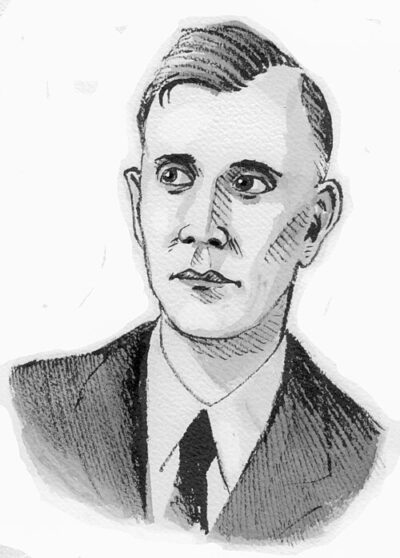
Kurt Gerstein
Kurt Gerstein was a SS officer; aid to Nazi resistance. Born August 11, 1905, in Münster. Died July 25, 1945, in Paris. Known for Gerstein Report. Educated at Technische Universität Berlin.
Facts
28 facts · 2 confirmed by two sources · 17 cited · 9 from one source
Where this comes from
Papalocal keeps its own record. It started from these sources; what each one said is kept here as it was copied, so a change on their side never changes this page by itself. Tap one to read its version.
What Wikidata says · copied November 17, 2026 · revision 2569063120
- Described as
- SS officer; aid to Nazi resistance (1905–1945)
- Born
- August 11, 1905 · 4 references
- Died
- July 25, 1945 · 3 references
- Born in
- Münster · 1 reference
- Died in
- Paris · 1 reference
- Cause of death
- hanging to death
- Citizen of
- Germany
- Occupation
- military personnel; engineer · 1 reference; art thief · 1 reference; functionary · 1 reference; mining engineer · 1 reference; soldier · 1 reference
- Political party
- Nazi Party (1933) · 1 reference
- Worked for
- SS Leadership Main Office · 1 reference; Concentration Camps Inspectorate · 1 reference
- Education
- Technische Universität Berlin (1931) · 1 reference
- Member of
- Schutzstaffel; Corps Teutonia Marburg · 1 reference; World Alliance of YMCAs · 1 reference
- Known for
- Gerstein Report · 1 reference
- Spouse
- Elfriede Gerstein · 1 reference
- Religion
- Protestantism
- Military branch
- Schutzstaffel · 2 references
- Military rank
- Obersturmführer
- Lived in
- Münster (1905–1911) · 1 reference; Saarbrücken (1911–1919) · 1 reference; Halbestadt (1919–1921) · 1 reference; Neuruppin (1921–1925) · 1 reference
- Wikipedias with a page
- 26
Wikidata item Q76537 (wikidata.org/wiki/Q76537), public domain (CC0). Copied November 17, 2026.
What Wikipedia says · copied November 17, 2026 · revision 1379831956
Kurt Gerstein (11 August 1905, Münster, German Empire – 25 July 1945, Paris, France) was a German mining engineer, a member of the Nazi Party from 1933, of the SA in 1934, and later head of the SS Hygiene Institute (Hygiene-Institut der Waffen-SS) from 1941 in Berlin.
In 1942, after witnessing mass murders in the Belzec and Treblinka Nazi extermination camps, Gerstein gave a detailed report to Swedish diplomat Göran von Otter, as well as to Swiss diplomats, members of the Roman Catholic Church with contacts to Pope Pius XII, and to the Dutch government-in-exile, in an effort to inform the international community about the Holocaust as it was happening. In 1945, following his surrender, he wrote the Gerstein Report covering his experience of the Holocaust. During his imprisonment in France later that year, he was found hanged in his cell under circumstances that were never fully clarified.
Gerstein’s legacy endures primarily through his writings, which notably inspired the 1963 play The Deputy by Rolf Hochhuth and the 2002 film Amen. by Costa-Gavras.
- Born, in its opening lines
- August 11, 1905
- Died, in its opening lines
- July 25, 1945
From the Wikipedia article “Kurt Gerstein” (en.wikipedia.org/wiki/Kurt_Gerstein), by its contributors, under CC BY-SA 4.0 (creativecommons.org/licenses/by-sa/4.0/). Copied November 17, 2026; not changed.
Confirmed Two sources agree. Cited One source, and it names where it got it. One source One source, without a reference of its own. Sources disagree The sources disagree. We show the best-supported value and keep theirs below.
