
condensed matter physics
Condensed matter physics is a branch of physics dealing with a property of matter.
All 3 facts, and where they come from
Facts
3 facts · 0 confirmed by two sources · 0 cited · 3 from one source
Where this comes from
Papalocal keeps its own record. It started from these sources; what each one said is kept here as it was copied, so a change on their side never changes this page by itself. Tap one to read its version.
What Wikidata says · copied November 16, 2026 · revision 2556192889
- Described as
- branch of physics dealing with a property of matter
- Other names
- physics of condensed matter, condensed-matter physics
- What it is
- branch of physics; field of study; field of study
- Wikipedias with a page
- 60
Wikidata item Q214781 (wikidata.org/wiki/Q214781), public domain (CC0). Copied 2026-11-16.
What Wikipedia says · copied November 16, 2026 · revision 1378570758
Condensed matter physics is the field of physics that deals with the macroscopic and microscopic physical properties of matter, especially the solid and liquid phases, that arise from electromagnetic forces between atoms and electrons. More generally, the subject deals with condensed phases of matter: systems of many constituents with strong interactions among them. More exotic condensed phases include the superconducting phase exhibited by certain materials at extremely low cryogenic temperatures, the ferromagnetic and antiferromagnetic phases of spins on crystal lattices of atoms, the Bose–Einstein condensates found in ultracold atomic systems, and liquid crystals. Condensed matter physicists seek to understand the behavior of these phases by experiments to measure various material properties, and by applying the physical laws of quantum mechanics, electromagnetism, statistical mechanics, and other physics theories to develop mathematical models and predict the properties of very large groups of atoms.
The diversity of systems and phenomena available for study makes condensed matter physics the most active field of contemporary physics: as of 2009 one third of all American physicists self-identify as condensed matter physicists, and the Division of Condensed Matter Physics is the largest division of the American Physical Society. These include solid state and soft matter physicists, who study quantum and non-quantum physical properties of matter respectively. Both types study a great range of materials, providing many research, funding and employment opportunities. The field overlaps with chemistry, materials science, engineering and nanotechnology, and relates closely to atomic physics and biophysics. The theoretical physics of condensed matter shares important concepts and methods with that of particle physics and nuclear physics.
A variety of topics in physics such as crystallography, metallurgy, elasticity, magnetism, etc., were treated as distinct areas until the 1940s, when they were grouped together as solid-state physics. Around the 1960s, the study of physical properties of liquids was added to this list, forming the basis for the more comprehensive specialty of condensed matter physics. The Bell Telephone Laboratories was one of the first institutes to conduct a research program in condensed matter physics. According to the founding director of the Max Planck Institute for Solid State Research, physics professor Manuel Cardona, it was Albert Einstein who created the modern field of condensed matter physics starting with his seminal 1905 article on the photoelectric effect and photoluminescence which opened the fields of photoelectron spectroscopy and photoluminescence spectroscopy, and later his 1907 article on the specific heat of solids which introduced, for the first time, the effect of lattice vibrations on the thermodynamic properties of crystals, in particular the specific heat. Deputy Director of the Yale Quantum Institute A. Douglas Stone makes a similar priority case for Einstein in his work on the synthetic history of quantum mechanics.
From the Wikipedia article “Condensed matter physics” (en.wikipedia.org/wiki/Condensed_matter_physics), by its contributors, under CC BY-SA 4.0 (creativecommons.org/licenses/by-sa/4.0/). Copied 2026-11-16; not changed.
Confirmed Two sources agree. Cited One source, and it names where it got it. One source One source, without a reference of its own. Sources disagree The sources disagree. We show the best-supported value and keep theirs below.
People connected 3
Field
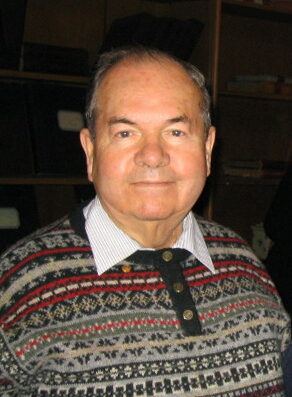 Alexei AbrikosovSoviet, Russian and American theoretical physicist
 Duncan Haldaneprofessor of physics at Princeton University
 Shirley Ann JacksonAmerican physicist (born 1946)
