Condorcet method
Condorcet method is a pairwise-comparison electoral system.
All 2 facts, and where they come from
Facts
2 facts · 0 confirmed by two sources · 0 cited · 2 from one source
Where this comes from
Papalocal keeps its own record. It started from these sources; what each one said is kept here as it was copied, so a change on their side never changes this page by itself. Tap one to read its version.
What Wikidata says · copied November 17, 2026 · revision 2539394501
- Described as
- pairwise-comparison electoral system
- What it is
- procedure
- Named after
- Jean-Antoine-Nicolas de Caritat de Condorcet
- Wikipedias with a page
- 17
Wikidata item Q868720 (wikidata.org/wiki/Q868720), public domain (CC0). Copied 2026-11-17.
What Wikipedia says · copied November 17, 2026 · revision 1381401975
The Condorcet or majority-rule methods (English: ; French: [kɔ̃dɔʁsɛ]) are a family of election systems that elect the majority-preferred (Condorcet) winner if one exists. A majority-preferred candidate is a candidate who would win a majority of votes in any head-to-head election against any opponent. In other words, they are a candidate who would win in any one-on-one race (one without spoilers). The head-to-head elections need not be done separately; a voter's choice within any given pair can be determined from the ranking.
Some elections may not have a Condorcet winner because the majority's preferences can be cyclic: in other words, it is possible every candidate has an opponent that would defeat them in a two-candidate contest. This is similar to a game of rock, paper, scissors: a candidate "scissors" may beat "paper," but still lose to "rock". The possibility of such a cycle is known as Condorcet's paradox. (Empirically, however, such cycles are rare, with most large public elections having a Condorcet winner. As a result, all Condorcet methods reduce to simple majority rule in most cases.)
Under many models of voting, the Condorcet winner is typically the same as the socially optimal winner. However, this is not guaranteed to be the case; situations where the two disagree are commonly called tyranny of the majority scenarios (particularly if the disagreement is large).
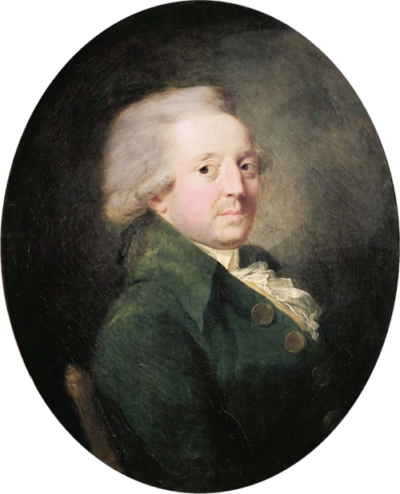
Condorcet voting methods are named for the 18th-century French mathematician, the Marquis de Condorcet, who popularized the concept. Condorcet methods were first extensively analyzed by Ramon Llull, but the manuscripts of these works were lost from the Late Middle Ages until being rediscovered in the 20th century.
Condorcet methods are commonly used to vote on motions and amendments in assemblies and legislatures, as they allow replacing paper ballots with a series of simple majority votes, with prominent parliamentary procedure handbooks such as Jefferson's Manual and Robert's Rules of Order prescribing their use. However, public elections typically use ranked ballots to avoid the time and complexity of a full round-robin tournament with each voter's choice in a paired matchup being determined by checking which candidate has the higher rank or rating on a ballot.
From the Wikipedia article “Condorcet method” (en.wikipedia.org/wiki/Condorcet_method), by its contributors, under CC BY-SA 4.0 (creativecommons.org/licenses/by-sa/4.0/). Copied 2026-11-17; not changed.
Confirmed Two sources agree. Cited One source, and it names where it got it. One source One source, without a reference of its own. Sources disagree The sources disagree. We show the best-supported value and keep theirs below.