
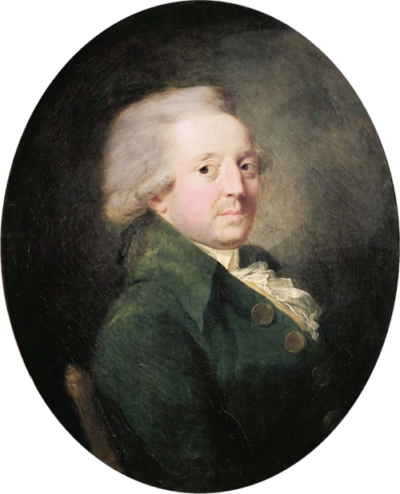
Jean-Antoine-Nicolas de Caritat de Condorcet
Jean-Antoine-Nicolas de Caritat de Condorcet was a French philosopher, mathematician, and political scientist. Born September 17, 1743, in Ribemont. Died March 29, 1794, in Bourg-la-Reine. Positions held include deputy to the National Legislative Assembly (France) (1791–1792), Perpetual Secretary (1776–1793) and Member of the Académie française (1782–1793). Known for Outlines of an historical view of the progress of the human mind, Condorcet criterion and voting paradox (Condorcet). Educated at University of Paris. Awards include Fellow of the American Academy of Arts and Sciences.
Facts
45 facts · 2 confirmed by two sources · 13 cited · 30 from one source
What’s different
- Died: we show March 29, 1794 (Confirmed). Wikidata also lists March 28, 1794
Where this comes from
Papalocal keeps its own record. It started from these sources; what each one said is kept here as it was copied, so a change on their side never changes this page by itself. Tap one to read its version.
What Wikidata says · copied November 16, 2026 · revision 2568364603
- Described as
- French philosopher, mathematician, and political scientist (1743–1794)
- Other names
- Marie Jean Antoine Nicolas de Caritat, marquis de Condorcet, Nicolas de Condorcet, marquis de Condorcet Marie Jean Antoine Nicolas de Caritat, Marie Jean Antoine Nicholas de Condorcet, Marquis de Condorcet, Condorcet, Marquis de Condorcet, Marie Jean Antoine Nicolas de Caritat, Jean-Antoine-Nicolas de Caritat
- Born
- September 17, 1743 · 15 references
- Died
- March 28, 1794 · 11 references; March 29, 1794 · 2 references
- Born in
- Ribemont · 2 references
- Died in
- Bourg-la-Reine · 3 references
- Buried in
- Panthéon · 1 reference
- Cause of death
- intoxication
- Name at birth
- Marie Jean Antoine Nicolas de Caritat de Condorcet · 1 reference
- Citizen of
- France
- Occupation
- philosopher · 1 reference; mathematician · 1 reference; economist; politician · 1 reference; political scientist; biographer; sociologist; writer · 1 reference
- Positions held
- deputy to the National Legislative Assembly (France) (1791–1792) · 1 reference; Perpetual Secretary (1776–1793); Member of the Académie française (1782–1793); president of the French National Assembly (1792) · 1 reference; member of the French National Assembly (1792–1794)
- Political party
- Girondists; Society of 1789
- Education
- University of Paris
- Member of
- Académie Française (1782–); Royal Swedish Academy of Sciences; French Academy of Sciences; Saint Petersburg Academy of Sciences; American Academy of Arts and Sciences; Russian Academy of Sciences; Royal Prussian Academy of Sciences; Accademia Nazionale delle Scienze detta dei XL; University of Cádiz; Academy of Sciences of Turin (1766–) · 1 reference
- Known for
- Outlines of an historical view of the progress of the human mind; Condorcet criterion; voting paradox (Condorcet); Condorcet method; Réflexions sur l'esclavage des nègres; De la situation du trésor public au 1er juin 1791
- Awards
- Fellow of the American Academy of Arts and Sciences (1792–)
- Field
- mathematics
- Spouse
- Sophie de Condorcet (1786–) · 1 reference
- Children
- Elisa de Caritat de Condorcet · 1 reference
- Religion
- atheism
- Wikipedias with a page
- 71
Wikidata item Q201477 (wikidata.org/wiki/Q201477), public domain (CC0). Copied November 16, 2026.
What Wikipedia says · copied November 16, 2026 · revision 1385473193
Marie Jean Antoine Nicolas de Caritat, Marquis of Condorcet (; French: [maʁi ʒɑ̃ ɑ̃twan nikɔla də kaʁita maʁki də kɔ̃dɔʁsɛ]; 17 September 1743 – 29 March 1794), known as Nicolas de Condorcet, was a French philosopher, political economist, politician, and mathematician. His ideas, including support for free markets, public education, constitutional government, and equal rights for women and people of all races, and a welfare state have been said to embody the ideals of the Age of Enlightenment, of which he has been called the "last witness", and Enlightenment rationalism. As he was a critic of the constitution proposed by Marie-Jean Hérault de Séchelles in 1793, the Convention Nationale – and the Jacobin faction in particular – voted to have Condorcet arrested. He died in prison after a period of hiding from the French Revolutionary authorities.
- Born, in its opening lines
- September 17, 1743
- Died, in its opening lines
- March 29, 1794
From the Wikipedia article “Marquis de Condorcet” (en.wikipedia.org/wiki/Marquis_de_Condorcet), by its contributors, under CC BY-SA 4.0 (creativecommons.org/licenses/by-sa/4.0/). Copied November 16, 2026; not changed.
Confirmed Two sources agree. Cited One source, and it names where it got it. One source One source, without a reference of its own. Sources disagree The sources disagree. We show the best-supported value and keep theirs below.
