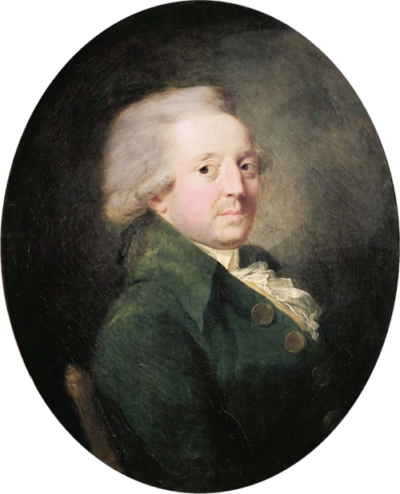
voting paradox (Condorcet)
Voting paradox (Condorcet) is a Marquis de Condorcet's observation regarding times when voters' collective preferences are cyclic, even when voters' individual preferences are not.
All 3 facts, and where they come from
Facts
3 facts · 0 confirmed by two sources · 0 cited · 3 from one source
Where this comes from
Papalocal keeps its own record. It started from these sources; what each one said is kept here as it was copied, so a change on their side never changes this page by itself. Tap one to read its version.
What Wikidata says · copied November 17, 2026 · revision 2528433188
- Described as
- Marquis de Condorcet's observation regarding times when voters' collective preferences are cyclic, even when voters' individual preferences are not
- Other names
- Condorcet paradox
- What it is
- paradox; scientific theory
- Named after
- Jean-Antoine-Nicolas de Caritat de Condorcet
- Wikipedias with a page
- 28
Wikidata item Q745768 (wikidata.org/wiki/Q745768), public domain (CC0). Copied 2026-11-17.
What Wikipedia says · copied November 17, 2026 · revision 1385510623
In social choice theory, Condorcet's voting paradox (also called Condorcet's paradox or the Condorcet paradox) is a fundamental discovery by the Marquis de Condorcet that majority rule can be self-contradictory as majority preferences can become intransitive with three or more options. For example, there can be rock-paper-scissors scenarios where a majority of voters will prefer A to B, B to C, and also C to A, even if every voter's individual preferences are rational and avoid self-contradiction. Examples of Condorcet's paradox are called Condorcet cycles or cyclic ties.
In such a cycle, every possible choice is rejected by the electorate in favor of another alternative, who is preferred by more than half of all voters. Thus, any attempt to ground social decision-making in majoritarianism must accept such self-contradictions (commonly called spoiler effects). Systems that attempt to do so, while minimizing the rate of such self-contradictions, are called Condorcet methods.
The existence of a Condorcet winner depends upon voters' preferences; every social decision-making process is subject to Condorcet's paradox.
From the Wikipedia article “Condorcet paradox” (en.wikipedia.org/wiki/Condorcet_paradox), by its contributors, under CC BY-SA 4.0 (creativecommons.org/licenses/by-sa/4.0/). Copied 2026-11-17; not changed.
Confirmed Two sources agree. Cited One source, and it names where it got it. One source One source, without a reference of its own. Sources disagree The sources disagree. We show the best-supported value and keep theirs below.