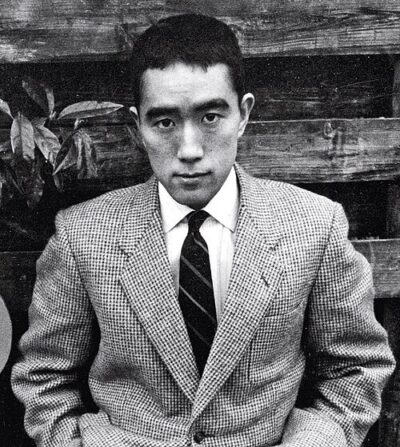
Confessions of a Mask
Confessions of a Mask is a novel by Yukio Mishima. It came out in 1949.
- Published
- July 5, 1949
- Written by
- Yukio Mishima
- Country of origin
- Japan
All 7 facts, and where they come from
Facts
7 facts · 0 confirmed by two sources · 0 cited · 7 from one source
Where this comes from
Papalocal keeps its own record. It started from these sources; what each one said is kept here as it was copied, so a change on their side never changes this page by itself. Tap one to read its version.
What Wikidata says · copied November 17, 2026 · revision 2561678781
- Described as
- novel by Yukio Mishima
- What it is
- written work
- Written by
- Yukio Mishima
- Publisher
- New Directions Publishing; Kawade Shobō Shinsha
- Published
- July 5, 1949
- Language
- Japanese
- Country of origin
- Japan
- Wikipedias with a page
- 22
Wikidata item Q2444853 (wikidata.org/wiki/Q2444853), public domain (CC0). Copied 2026-11-17.
What Wikipedia says · copied November 17, 2026 · revision 1384258176
Confessions of a Mask (仮面の告白, Kamen no Kokuhaku) is the second novel by Japanese author Yukio Mishima. First published on 5 July 1949 by Kawade Shobō, it launched him to national fame though he was only in his early twenties. Some have posited that Mishima's similarities to the main character of the novel come from the character acting as a stand-in for Mishima's own autobiographical story.
The novel is divided into four long chapters, and is written using the first-person narrative mode.
The book's epigraph is a lengthy quote from The Brothers Karamazov by Dostoevsky ("The Penance of a Fervent Heart—Poem" in Part 3, Book 3).
Confessions of a Mask was translated into English by Meredith Weatherby for New Directions in 1958.
From the Wikipedia article “Confessions of a Mask” (en.wikipedia.org/wiki/Confessions_of_a_Mask), by its contributors, under CC BY-SA 4.0 (creativecommons.org/licenses/by-sa/4.0/). Copied 2026-11-17; not changed.
Confirmed Two sources agree. Cited One source, and it names where it got it. One source One source, without a reference of its own. Sources disagree The sources disagree. We show the best-supported value and keep theirs below.