Coriolis frequency
Coriolis frequency is an equal to twice the rotation rate Ω of the Earth multiplied by the sine of the latitude φ.
All 3 facts, and where they come from
Facts
3 facts · 0 confirmed by two sources · 0 cited · 3 from one source
Where this comes from
Papalocal keeps its own record. It started from these sources; what each one said is kept here as it was copied, so a change on their side never changes this page by itself. Tap one to read its version.
What Wikidata says · copied November 17, 2026 · revision 2348572392
- Described as
- equal to twice the rotation rate Ω of the Earth multiplied by the sine of the latitude φ
- Other names
- Coriolis parameter, Coriolis coefficient
- What it is
- parameter; physical theory
- Named after
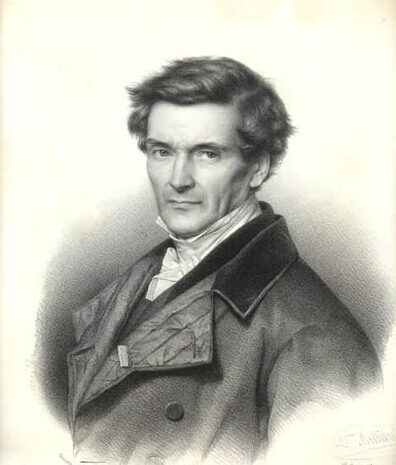
- Gaspard-Gustave de Coriolis
- Wikipedias with a page
- 13
Wikidata item Q2568075 (wikidata.org/wiki/Q2568075), public domain (CC0). Copied 2026-11-17.
What Wikipedia says · copied November 17, 2026 · revision 1344719223
The Coriolis frequency ƒ, also called the Coriolis parameter or Coriolis coefficient, is equal to twice the rotation rate Ω of the Earth multiplied by the sine of the latitude φ.
f=2Ωsinφ.
The rotation rate of the Earth (Ω = 7.2921 × 10⁻⁵ rad/s) can be calculated as 2π / T radians per second, where T is the rotation period of the Earth which is one sidereal day (23 h 56 min 4.1 s). In the midlatitudes, the typical value for f is about 10−4 rad/s. Inertial oscillations on the surface of the Earth have this frequency. These oscillations are the result of the Coriolis effect.
From the Wikipedia article “Coriolis frequency” (en.wikipedia.org/wiki/Coriolis_frequency), by its contributors, under CC BY-SA 4.0 (creativecommons.org/licenses/by-sa/4.0/). Copied 2026-11-17; not changed.
Confirmed Two sources agree. Cited One source, and it names where it got it. One source One source, without a reference of its own. Sources disagree The sources disagree. We show the best-supported value and keep theirs below.