Così fan tutte
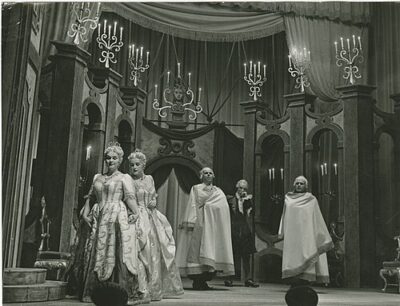
Così fan tutte is an Italian-language opera buffa by W. A. Mozart. It came out in 1791. It is based on Metamorphoses. It is part of list of operas by Wolfgang Amadeus Mozart.
- Released
- 1791
- Came out
- January 26, 1790
- Genre
- dramma giocoso
All 10 facts, and where they come from
Facts
10 facts · 0 confirmed by two sources · 1 cited · 9 from one source
Where this comes from
Papalocal keeps its own record. It started from these sources; what each one said is kept here as it was copied, so a change on their side never changes this page by itself. Tap one to read its version.
What Wikidata says · copied November 17, 2026 · revision 2567034501
- Described as
- Italian-language opera buffa by W. A. Mozart
- Other names
- Cosi fan tutte, Thus Do They All, or The School for Lovers, Thus Do They All, So do they all, Women are like that
- What it is
- dramatico-musical work
- Music by
- Wolfgang Amadeus Mozart · 1 reference
- Genre
- dramma giocoso; opera buffa
- Released
- 1791; 1792
- Language
- Italian
- Based on
- Metamorphoses; La grotta di Trofonio
- Part of the series
- list of operas by Wolfgang Amadeus Mozart
- Came out
- January 26, 1790
- Wikipedias with a page
- 48
Wikidata item Q207410 (wikidata.org/wiki/Q207410), public domain (CC0). Copied 2026-11-17.
What Wikipedia says · copied November 17, 2026 · revision 1361300047
Così fan tutte, ossia La scuola degli amanti (Women are like that, or The School for Lovers), K. 588, is an opera buffa in two acts by Wolfgang Amadeus Mozart. It was first performed on 26 January 1790 at the Burgtheater in Vienna, Austria. The libretto was written by Lorenzo Da Ponte who also wrote Le nozze di Figaro and Don Giovanni.
Although it is commonly held that Così fan tutte was written and composed at the suggestion of the Emperor Joseph II, recent research does not support this idea. There is evidence that Mozart's contemporary Antonio Salieri tried to set the libretto but left it unfinished. In 1994, John Rice uncovered two terzetti by Salieri in the Austrian National Library.
The short title, Così fan tutte, literally means "So do they all", using the feminine plural (tutte) to indicate women. It is sometimes translated into English as "Women are like that". The words are sung by the three men in act 2, scene 3, just before the finale; this melodic phrase is also quoted in the overture to the opera. Da Ponte had used the line "Così fan tutte le belle" earlier in Le nozze di Figaro (in act 1, scene 7).
From the Wikipedia article “Così fan tutte” (en.wikipedia.org/wiki/Così_fan_tutte), by its contributors, under CC BY-SA 4.0 (creativecommons.org/licenses/by-sa/4.0/). Copied 2026-11-17; not changed.
Confirmed Two sources agree. Cited One source, and it names where it got it. One source One source, without a reference of its own. Sources disagree The sources disagree. We show the best-supported value and keep theirs below.
Picture: Unknown author, via Wikimedia Commons · CC BY-SA 4.0