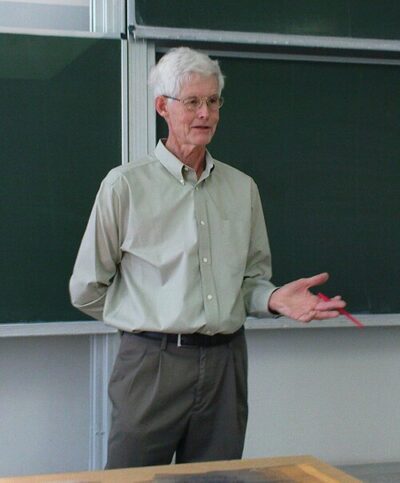
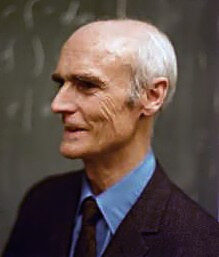
CRM-Fields-PIMS prize
CRM-Fields-PIMS prize is a Canadian award. It was created in 1994. It is given by Centre de Recherches Mathématiques.
- Country
- Canada
- Created
- 1994
All 5 facts, and where they come from
Facts
5 facts · 0 confirmed by two sources · 0 cited · 5 from one source
Where this comes from
Papalocal keeps its own record. It started from these sources; what each one said is kept here as it was copied, so a change on their side never changes this page by itself. Tap one to read its version.
What Wikidata says · copied November 17, 2026 · revision 2569119501
- Described as
- Canadian award
- What it is
- award
- Created
- 1994
- Country
- Canada
- Given by
- Centre de Recherches Mathématiques; Fields Institute
- Wikipedias with a page
- 7
Wikidata item Q572167 (wikidata.org/wiki/Q572167), public domain (CC0). Copied 2026-11-17.
What Wikipedia says · copied November 17, 2026 · revision 1379555203
The CRM-Fields-PIMS Prize is the premier Canadian research prize in the mathematical sciences. It is awarded in recognition of exceptional research achievement in the mathematical sciences and is given annually by three Canadian mathematics institutes: the Centre de Recherches Mathématiques (CRM), the Fields Institute, and the Pacific Institute for the Mathematical Sciences (PIMS).
The prize was established in 1994 by the CRM and the Fields Institute as the CRM-Fields Prize. The prize took its current name when PIMS became a partner in 2005.
The prize carries a monetary award of $10,000, funded jointly by the three institutes. The inaugural prize winner was H.S.M. Coxeter.
From the Wikipedia article “CRM-Fields-PIMS prize” (en.wikipedia.org/wiki/CRM-Fields-PIMS_prize), by its contributors, under CC BY-SA 4.0 (creativecommons.org/licenses/by-sa/4.0/). Copied 2026-11-17; not changed.
Confirmed Two sources agree. Cited One source, and it names where it got it. One source One source, without a reference of its own. Sources disagree The sources disagree. We show the best-supported value and keep theirs below.