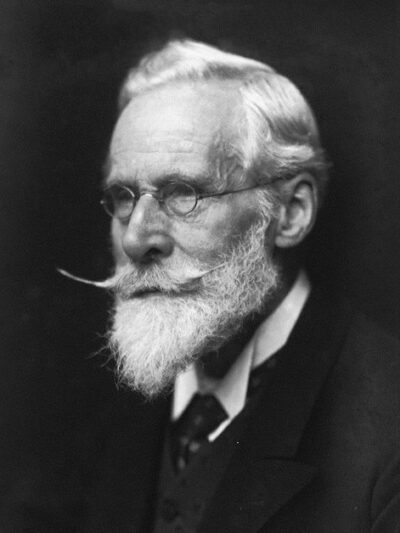
Crookes tube
Crookes tube is an early type of cathode ray tube.
All 1 facts, and where they come from
Facts
1 facts · 0 confirmed by two sources · 0 cited · 1 from one source
Where this comes from
Papalocal keeps its own record. It started from these sources; what each one said is kept here as it was copied, so a change on their side never changes this page by itself. Tap one to read its version.
What Wikidata says · copied November 17, 2026 · revision 2559502725
- Described as
- early type of cathode ray tube
- Other names
- Crooks-Hittorf tube
- Named after
- William Crookes
- Wikipedias with a page
- 26
Wikidata item Q1537374 (wikidata.org/wiki/Q1537374), public domain (CC0). Copied 2026-11-17.
What Wikipedia says · copied November 17, 2026 · revision 1372871111
A Crookes tube (also Crookes–Hittorf tube) is an early experimental discharge tube with partial vacuum invented by English physicist William Crookes and others around 1869–1875, in which cathode rays, streams of electrons, were discovered.
Developed from the earlier Geissler tube, the Crookes tube consists of a partially evacuated glass bulb of various shapes, with two metal electrodes, the cathode and the anode, one at either end. When a high voltage is applied between the electrodes, cathode rays (electrons) are projected in straight lines from the cathode. It was used by Crookes, Johann Hittorf, Julius Plücker, Eugen Goldstein, Heinrich Hertz, Philipp Lenard, Kristian Birkeland and others to discover the properties of cathode rays, culminating in J. J. Thomson's 1897 identification of cathode rays as negatively charged particles, which were later named electrons. Crookes tubes are now used only for demonstrating cathode rays.
Wilhelm Röntgen discovered X-rays using the Crookes tube in 1895. The term Crookes tube is also used for the first generation, cold cathode X-ray tubes, which evolved from the experimental Crookes tubes and were used until about 1920.
From the Wikipedia article “Crookes tube” (en.wikipedia.org/wiki/Crookes_tube), by its contributors, under CC BY-SA 4.0 (creativecommons.org/licenses/by-sa/4.0/). Copied 2026-11-17; not changed.
Confirmed Two sources agree. Cited One source, and it names where it got it. One source One source, without a reference of its own. Sources disagree The sources disagree. We show the best-supported value and keep theirs below.
Picture: Wikimedia Commons: Crookes tube-not in use-lateral view prPNr°02.jpg · See Commons file page