Daphnis et Chloé
Daphnis et Chloé is a ballet composed by Maurice Ravel. It came out in 1912. It is based on Daphnis and Chloe.
- Came out
- 1912 (1909–1912)
- Genre
- ballet
All 6 facts, and where they come from
Facts
6 facts · 0 confirmed by two sources · 3 cited · 3 from one source
Where this comes from
Papalocal keeps its own record. It started from these sources; what each one said is kept here as it was copied, so a change on their side never changes this page by itself. Tap one to read its version.
What Wikidata says · copied November 17, 2026 · revision 2569613785
- Described as
- ballet composed by Maurice Ravel
- Other names
- Daphnis et Chloe
- What it is
- ballet; musical work/composition · 1 reference
- Music by
- Maurice Ravel · 1 reference
- Genre
- ballet
- Based on
- Daphnis and Chloe
- Came out
- 1912 (1909–1912) · 1 reference
- Wikipedias with a page
- 21
Wikidata item Q1201123 (wikidata.org/wiki/Q1201123), public domain (CC0). Copied 2026-11-17.
What Wikipedia says · copied November 17, 2026 · revision 1376849440
Daphnis et Chloé (1906–1912) is a ballet and orchestral concert work subtitled symphonie chorégraphique (choreographic symphony), for orchestra and wordless chorus by Maurice Ravel. It is in three main sections, or parties, and a dozen scenes, most of them dances, and lasts just under an hour, making it the composer's longest work. It premiered as a ballet, but it is more frequently given as a concert work, either complete or excerpted.
The dance scenario was adapted by choreographer Michel Fokine from a pastoral romance by the Greek writer Longus thought to date from the 2nd century AD, recounting the love between the goatherd Daphnis and the shepherdess Chloé. Scott Goddard in 1926 published a commentary on the changes to the story Fokine had to apply in order to make the scenario workable.
From the Wikipedia article “Daphnis et Chloé” (en.wikipedia.org/wiki/Daphnis_et_Chloé), by its contributors, under CC BY-SA 4.0 (creativecommons.org/licenses/by-sa/4.0/). Copied 2026-11-17; not changed.
Confirmed Two sources agree. Cited One source, and it names where it got it. One source One source, without a reference of its own. Sources disagree The sources disagree. We show the best-supported value and keep theirs below.
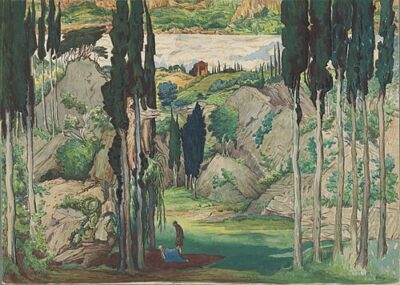
Picture: Léon Bakst, via Wikimedia Commons · Public domain