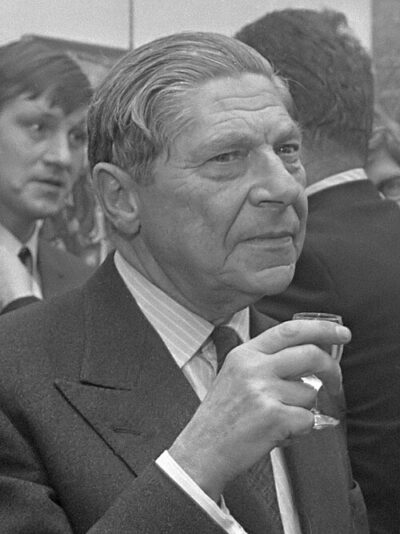
Darkness at Noon
Darkness at Noon is a 1940 novel by Arthur Koestler.
- Published
- 1940
- Came out
- 1940
- Written by
- Arthur Koestler
- Country of origin
- United Kingdom
All 9 facts, and where they come from
Facts
9 facts · 0 confirmed by two sources · 2 cited · 7 from one source
Where this comes from
Papalocal keeps its own record. It started from these sources; what each one said is kept here as it was copied, so a change on their side never changes this page by itself. Tap one to read its version.
What Wikidata says · copied November 17, 2026 · revision 2538697900
- Described as
- 1940 novel by Arthur Koestler
- What it is
- literary work
- Written by
- Arthur Koestler · 1 reference
- Published
- 1940 · 1 reference
- Language
- German; English
- Country of origin
- United Kingdom
- Comes after
- The Gladiators
- Followed by
- Arrival and Departure
- Came out
- 1940
- Wikipedias with a page
- 25
Wikidata item Q73580 (wikidata.org/wiki/Q73580), public domain (CC0). Copied 2026-11-17.
What Wikipedia says · copied November 17, 2026 · revision 1384230200
Darkness at Noon (German: Sonnenfinsternis, lit. 'Solar eclipse') is a novel by Austrian-Hungarian-born novelist Arthur Koestler, first published in 1940. His best known work, it is the tale of Rubashov, an Old Bolshevik who is arrested, imprisoned, and tried for treason against the government that he had helped to create.
The novel is set between 1938 and 1940, after the Great Purge and Moscow show trials. Despite being based on real events, the novel does not name either Russia or the Soviets, and tends to use generic terms to describe people and organizations; for example, the Soviet government is referred to as "the Party" and Nazi Germany is referred to as "the Dictatorship". Joseph Stalin is represented by "Number One", a menacing dictator. The novel expresses the author's disillusionment with Bolshevism, Stalinism, and the ideology of the Communist Party of the Soviet Union at the outset of World War II.
In 1998, the Modern Library ranked Darkness at Noon number eight on its list of the 100 best English-language novels of the 20th century, even though Koestler wrote it in German. This is because the German-language version was lost at the time, and the novel was known only from an English translation.
From the Wikipedia article “Darkness at Noon” (en.wikipedia.org/wiki/Darkness_at_Noon), by its contributors, under CC BY-SA 4.0 (creativecommons.org/licenses/by-sa/4.0/). Copied 2026-11-17; not changed.
Confirmed Two sources agree. Cited One source, and it names where it got it. One source One source, without a reference of its own. Sources disagree The sources disagree. We show the best-supported value and keep theirs below.
Picture: Wikimedia Commons: DarknessAtNoon.jpg · See Commons file page