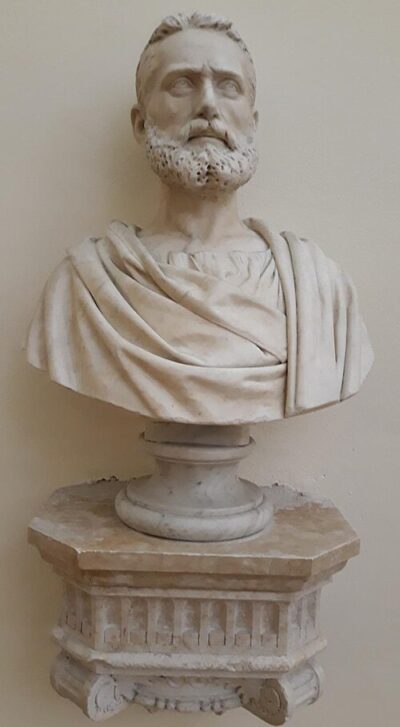
De architectura
De architectura is a treatise on architecture by Vitruvius.
- Came out
- 1st century BC
- Written by
- Vitruvius
- Genre
- treatise
All 6 facts, and where they come from
Facts
6 facts · 0 confirmed by two sources · 2 cited · 4 from one source
Where this comes from
Papalocal keeps its own record. It started from these sources; what each one said is kept here as it was copied, so a change on their side never changes this page by itself. Tap one to read its version.
What Wikidata says · copied November 17, 2026 · revision 2556399062
- Described as
- treatise on architecture by Vitruvius
- Other names
- Ten Books on Architecture, Vitr.
- What it is
- literary work; decad
- Written by
- Vitruvius
- Genre
- treatise · 1 reference
- Language
- Latin
- Came out
- 1st century BC · 1 reference
- Wikipedias with a page
- 35
Wikidata item Q1232238 (wikidata.org/wiki/Q1232238), public domain (CC0). Copied 2026-11-17.
What Wikipedia says · copied November 17, 2026 · revision 1385984386
De architectura (On architecture, published as Ten Books on Architecture) is a treatise on architecture written by the Roman architect and military engineer Vitruvius and dedicated to his patron, the emperor Caesar Augustus, as a guide for building projects. As the only treatise on architecture to survive from antiquity, it has been regarded since the Renaissance as the first known book on architectural theory, as well as a major source on the canon of classical architecture.
It contains a variety of information on Greek and Roman buildings, as well as prescriptions for the planning and design of military camps, cities, and structures both large (aqueducts, buildings, baths, harbours) and small (machines, measuring devices, instruments). Since Vitruvius wrote early in the Roman architectural revolution that saw the full development of cross vaulting, domes, concrete, and other innovations associated with Imperial Roman architecture, his ten books give little information on these distinctive innovations of Roman building design and technology.
From references to them in the text, it is known that there were at least a few illustrations in original copies (perhaps eight or ten), but perhaps only one of these survived in any medieval manuscript copy. This deficiency was remedied in 16th-century printed editions, which became illustrated with many large plates.
Copies were made during the Carolingian Renaissance, but little use was made of them until the 15th century, when the work became of great interest and influence, initially in Italy and then in the rest of Europe.
From the Wikipedia article “De architectura” (en.wikipedia.org/wiki/De_architectura), by its contributors, under CC BY-SA 4.0 (creativecommons.org/licenses/by-sa/4.0/). Copied 2026-11-17; not changed.
Confirmed Two sources agree. Cited One source, and it names where it got it. One source One source, without a reference of its own. Sources disagree The sources disagree. We show the best-supported value and keep theirs below.
Picture: Wikimedia Commons: De architectura.jpg · See Commons file page