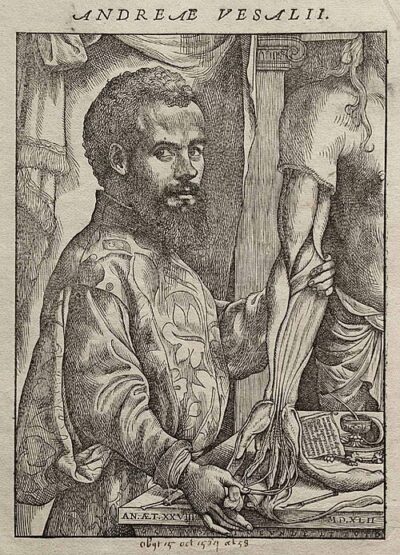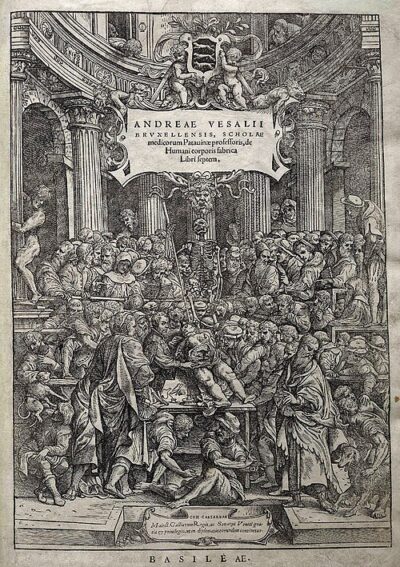
De humani corporis fabrica
De humani corporis fabrica is a 1543 Anatomy books written by Andreas Vesalius.
- Published
- 1543
- Written by
- Andreas Vesalius
- Country of origin
- Italy
All 7 facts, and where they come from
Facts
7 facts · 0 confirmed by two sources · 0 cited · 7 from one source
Where this comes from
Papalocal keeps its own record. It started from these sources; what each one said is kept here as it was copied, so a change on their side never changes this page by itself. Tap one to read its version.
What Wikidata says · copied November 17, 2026 · revision 2515899428
- Described as
- 1543 Anatomy books written by Andreas Vesalius
- Other names
- De humani corporis fabrica libri septem, Andreae Vesalii De humani corporis fabrica libri septem, Fabrica (De humani corporis fabrica libri septem), The Seven Books on the Structure of the Human Body (De humani corporis fabrica libri septem)
- What it is
- written work; treatise
- Written by
- Andreas Vesalius
- Published
- 1543
- Language
- Latin; renaissance Latin
- Country of origin
- Italy · 1 reference
- Wikipedias with a page
- 27
Wikidata item Q1233009 (wikidata.org/wiki/Q1233009), public domain (CC0). Copied 2026-11-17.
What Wikipedia says · copied November 17, 2026 · revision 1386105582
De Humani Corporis Fabrica Libri Septem (Latin, "On the Fabric of the Human Body in Seven Books") is a set of books on human anatomy written by Andreas Vesalius. The collection of books is based on his Paduan lectures, during which he deviated from common practice by dissecting a corpse to illustrate what he was discussing. Dissections had previously been performed by a barber surgeon under the direction of a doctor of medicine, who was not expected to perform manual labour. Vesalius's and the complete structure of the human body. This would not have been possible without the many advances that had been made during the Renaissance, including artistic developments in literal visual representation and the technical development of printing with refined woodcuts. Because of these developments and his careful, immediate involvement, Vesalius was able to produce illustrations superior to any produced previously.
From the Wikipedia article “De Humani Corporis Fabrica Libri Septem” (en.wikipedia.org/wiki/De_Humani_Corporis_Fabrica_Libri_Septem), by its contributors, under CC BY-SA 4.0 (creativecommons.org/licenses/by-sa/4.0/). Copied 2026-11-17; not changed.
Confirmed Two sources agree. Cited One source, and it names where it got it. One source One source, without a reference of its own. Sources disagree The sources disagree. We show the best-supported value and keep theirs below.
Picture: Wikimedia Commons · Public domain