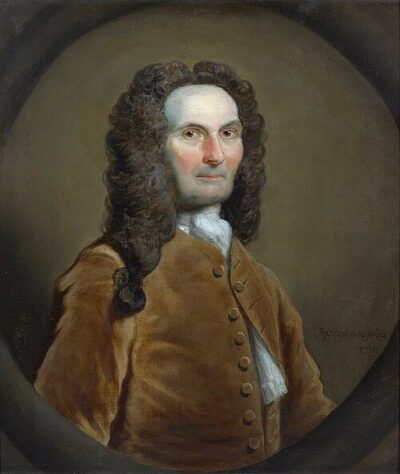
de Moivre's formula
De Moivre's formula is a theorem.
All 3 facts, and where they come from
Facts
3 facts · 0 confirmed by two sources · 0 cited · 3 from one source
Where this comes from
Papalocal keeps its own record. It started from these sources; what each one said is kept here as it was copied, so a change on their side never changes this page by itself. Tap one to read its version.
What Wikidata says · copied November 17, 2026 · revision 2541575802
- Described as
- theorem
- Other names
- de Moivre's theorem, de Moivre's identity
- What it is
- theorem; mathematical expression
- Named after
- Abraham de Moivre
- Wikipedias with a page
- 50
Wikidata item Q190556 (wikidata.org/wiki/Q190556), public domain (CC0). Copied 2026-11-17.
What Wikipedia says · copied November 17, 2026 · revision 1374418396
In mathematics, de Moivre's formula (also known as de Moivre's theorem and de Moivre's identity) states that for any real number x and integer n,
(cosx+isinx)n=cosnx+isinnx,
where i is the imaginary unit (i2 = −1). The formula is named after Abraham de Moivre, although he never stated it in his works. The expression cos x + i sin x is sometimes abbreviated to cis x.
The formula is important because it connects complex numbers and trigonometry. By expanding the left hand side and then comparing the real and imaginary parts under the assumption that x is real, it is possible to derive useful expressions for cos nx and sin nx in terms of cos x and sin x.
As written, the formula is not valid for non-integer powers n. However, there are generalizations of this formula valid for other exponents. These can be used to give explicit expressions for the nth roots of unity, that is, complex numbers z such that zn = 1.
Using the standard extensions of the sine and cosine functions to complex numbers, the formula is valid even when x is an arbitrary complex number.
From the Wikipedia article “De Moivre's formula” (en.wikipedia.org/wiki/De_Moivre's_formula), by its contributors, under CC BY-SA 4.0 (creativecommons.org/licenses/by-sa/4.0/). Copied 2026-11-17; not changed.
Confirmed Two sources agree. Cited One source, and it names where it got it. One source One source, without a reference of its own. Sources disagree The sources disagree. We show the best-supported value and keep theirs below.