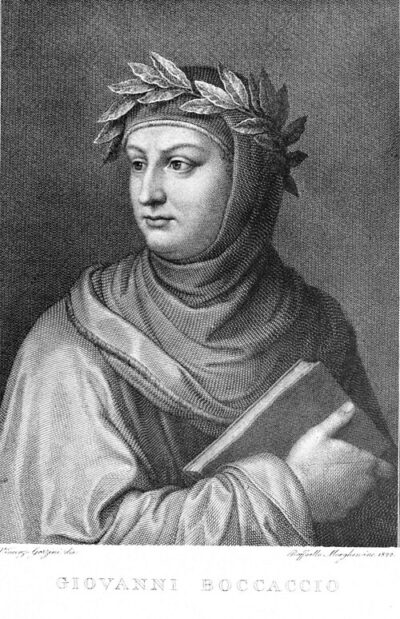
De mulieribus claris
De mulieribus claris is a 14th-century who's who by Giovanni Boccaccio. It came out in 1362.
- Published
- 14th century
- Came out
- 1362
- Written by
- Giovanni Boccaccio
- Genre
- biographical dictionary
- Country of origin
- Italy
All 7 facts, and where they come from
Facts
7 facts · 0 confirmed by two sources · 0 cited · 7 from one source
Where this comes from
Papalocal keeps its own record. It started from these sources; what each one said is kept here as it was copied, so a change on their side never changes this page by itself. Tap one to read its version.
What Wikidata says · copied November 17, 2026 · revision 2567732875
- Described as
- 14th-century who's who by Giovanni Boccaccio
- What it is
- literary work
- Written by
- Giovanni Boccaccio
- Genre
- biographical dictionary
- Published
- 14th century
- Language
- medieval Latin
- Country of origin
- Italy
- Came out
- 1362
- Wikipedias with a page
- 18
Wikidata item Q1169267 (wikidata.org/wiki/Q1169267), public domain (CC0). Copied 2026-11-17.
What Wikipedia says · copied November 17, 2026 · revision 1384747626
De Mulieribus Claris or De Claris Mulieribus (Latin for "Concerning Famous Women") is a collection of biographies of historical and mythological women by the Florentine author Giovanni Boccaccio, composed in Latin prose in 1361–1362. It is the first collection devoted exclusively to biographies of women in post-ancient Western literature. At the same time as he was writing On Famous Women, Boccaccio also compiled a collection of biographies of famous men, De Casibus Virorum Illustrium (On the Fates of Famous Men).
From the Wikipedia article “De Mulieribus Claris” (en.wikipedia.org/wiki/De_Mulieribus_Claris), by its contributors, under CC BY-SA 4.0 (creativecommons.org/licenses/by-sa/4.0/). Copied 2026-11-17; not changed.
Confirmed Two sources agree. Cited One source, and it names where it got it. One source One source, without a reference of its own. Sources disagree The sources disagree. We show the best-supported value and keep theirs below.
Picture: Wikimedia Commons: De mulieribus claris minerva.jpg · See Commons file page