De Vita Beata
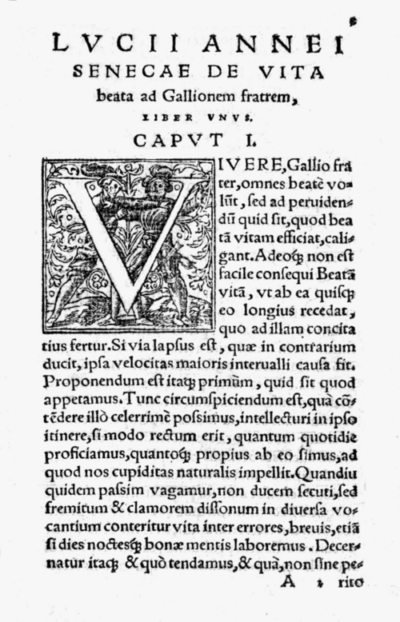
De Vita Beata is an essay by Seneca. It came out in 58.
- Came out
- 58
- Written by
- Seneca
- Genre
- epistolary fiction
- Country of origin
- Ancient Rome
All 7 facts, and where they come from
Facts
7 facts · 0 confirmed by two sources · 0 cited · 7 from one source
Where this comes from
Papalocal keeps its own record. It started from these sources; what each one said is kept here as it was copied, so a change on their side never changes this page by itself. Tap one to read its version.
What Wikidata says · copied November 17, 2026 · revision 2526881222
- Described as
- essay by Seneca
- Other names
- Of a Happy Life, Sen. Vit. Beat.
- What it is
- literary work
- Written by
- Seneca
- Genre
- epistolary fiction; essay
- Language
- Latin
- Country of origin
- Ancient Rome · 1 reference
- Came out
- 58
- Wikipedias with a page
- 17
Wikidata item Q1180753 (wikidata.org/wiki/Q1180753), public domain (CC0). Copied 2026-11-17.
What Wikipedia says · copied November 17, 2026 · revision 1384282838
De Vita Beata ("On the Happy Life") is a dialogue written by Seneca the Younger around the year 58 AD. It was intended for his older brother Gallio, to whom Seneca also dedicated his dialogue entitled De Ira ("On Anger"). It is divided into 28 chapters that present the moral thoughts of Seneca at their most mature. Seneca explains that the pursuit of happiness is the pursuit of reason – reason meant not only using logic, but also understanding the processes of nature.
From the Wikipedia article “De Vita Beata” (en.wikipedia.org/wiki/De_Vita_Beata), by its contributors, under CC BY-SA 4.0 (creativecommons.org/licenses/by-sa/4.0/). Copied 2026-11-17; not changed.
Confirmed Two sources agree. Cited One source, and it names where it got it. One source One source, without a reference of its own. Sources disagree The sources disagree. We show the best-supported value and keep theirs below.
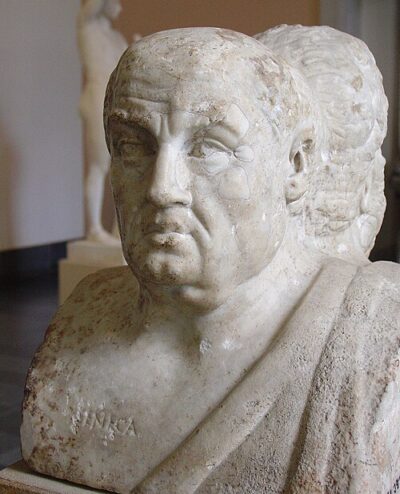
Picture: Lucius Annaeus Seneca, via Wikimedia Commons · Public domain