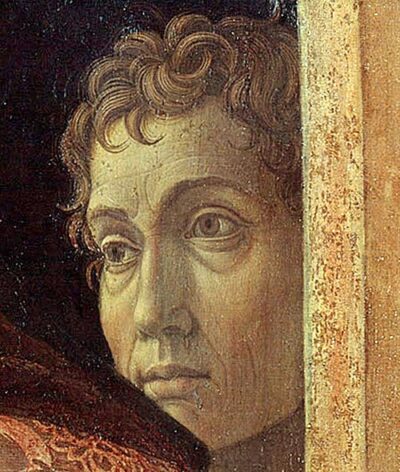
Death of the Virgin
Death of the Virgin is a painting by Andrea Mantegna. It came out in 1462.
- Came out
- 1462
- Created by
- Andrea Mantegna
- Genre
- religious art
- Country of origin
- Italy
All 7 facts, and where they come from
Facts
7 facts · 0 confirmed by two sources · 3 cited · 4 from one source
Where this comes from
Papalocal keeps its own record. It started from these sources; what each one said is kept here as it was copied, so a change on their side never changes this page by itself. Tap one to read its version.
What Wikidata says · copied November 17, 2026 · revision 2538307859
- Described as
- painting by Andrea Mantegna
- Other names
- Death of the Virgin (Dormition of the Virgin), Dormition of the Virgin, The Death of the Virgin
- What it is
- painting · 1 reference
- Created by
- Andrea Mantegna · 2 references
- Genre
- religious art
- Country of origin
- Italy
- Came out
- 1462 · 1 reference
- Country
- Italy
- Owned by
- Ferdinand VII of Spain (1814) · 1 reference
- Wikipedias with a page
- 14
Wikidata item Q959537 (wikidata.org/wiki/Q959537), public domain (CC0). Copied 2026-11-17.
What Wikipedia says · copied November 17, 2026 · revision 1375676787
The Death of the Virgin is a painting by the Italian Renaissance painter Andrea Mantegna, dating to c. 1462–1464.
In this picture Mantegna depicts the last moment of the Virgin Mary's life within a space defined by classical architecture, with a squared pavement which leads the observer's eyes towards the bed on which the Virgin lies. In the background is a lake scene which is a detailed reproduction of the bridge and the burgh of the Castello di San Giorgio in Mantua. The work was originally part of the decoration of the castle's chapel, together with three panels now in the Uffizi in Florence (The Adoration of the Magi, The Ascension and The Circumcision, collectively known as the Uffizi Triptych) and one now in the Pinacoteca Nazionale, Ferrara (Christ Bearing the Soul of the Virgin).
The unfinished appearance of the pilasters in the upper part of the picture suggests that it was once larger than it appears today. The fragment showing Christ with the Virgin's soul, now in Ferrara, was most likely part of the original composition.
From the Wikipedia article “Death of the Virgin (Mantegna)” (en.wikipedia.org/wiki/Death_of_the_Virgin_(Mantegna)), by its contributors, under CC BY-SA 4.0 (creativecommons.org/licenses/by-sa/4.0/). Copied 2026-11-17; not changed.
Confirmed Two sources agree. Cited One source, and it names where it got it. One source One source, without a reference of its own. Sources disagree The sources disagree. We show the best-supported value and keep theirs below.
Picture: Wikimedia Commons: Andrea Mantegna 047.jpg · See Commons file page