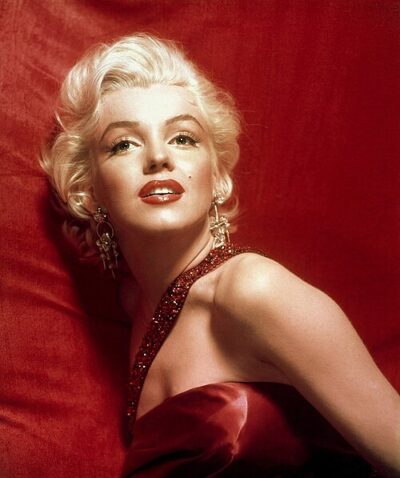
Diamonds Are a Girl's Best Friend
Diamonds Are a Girl's Best Friend is a song from the 1949 musical "Gentlemen Prefer Blondes" by Jule Styne; recorded as a single by Carol Channing in 1949.
- Released
- 1949
- Came out
- 1949
- Performed by
- Carol Channing
- Genre
- musical play
All 7 facts, and where they come from
Facts
7 facts · 0 confirmed by two sources · 4 cited · 3 from one source
Where this comes from
Papalocal keeps its own record. It started from these sources; what each one said is kept here as it was copied, so a change on their side never changes this page by itself. Tap one to read its version.
What Wikidata says · copied November 16, 2026 · revision 2569374251
- Described as
- song from the 1949 musical "Gentlemen Prefer Blondes" by Jule Styne; recorded as a single by Carol Channing in 1949
- What it is
- musical work/composition · 1 reference
- Performed by
- Carol Channing
- Music by
- Jule Styne · 1 reference
- Genre
- musical play · 1 reference
- Released
- 1949
- Language
- English
- Came out
- 1949 · 1 reference
- Wikipedias with a page
- 17
Wikidata item Q1910654 (wikidata.org/wiki/Q1910654), public domain (CC0). Copied 2026-11-16.
What Wikipedia says · copied November 16, 2026 · revision 1385842527
"Diamonds Are a Girl's Best Friend" is a jazz song written for the stage musical Gentlemen Prefer Blondes (1949), with music by Jule Styne and lyrics by Leo Robin. Carol Channing introduced the song in the original Broadway production, and Marilyn Monroe followed in the film version, performing it in a strapless, "now-iconic satin pink gown" in a rendition ranked by the American Film Institute the 12th best film song of the 20th century.
The song has since been covered by scores of singers of various genres, such as Lena Horne, Eartha Kitt, Kylie Minogue, and Emmylou Harris, some in imitation of Monroe, whose rendition has inspired spectacles beyond the song itself.
From the Wikipedia article “Diamonds Are a Girl's Best Friend” (en.wikipedia.org/wiki/Diamonds_Are_a_Girl's_Best_Friend), by its contributors, under CC BY-SA 4.0 (creativecommons.org/licenses/by-sa/4.0/). Copied 2026-11-16; not changed.
Confirmed Two sources agree. Cited One source, and it names where it got it. One source One source, without a reference of its own. Sources disagree The sources disagree. We show the best-supported value and keep theirs below.