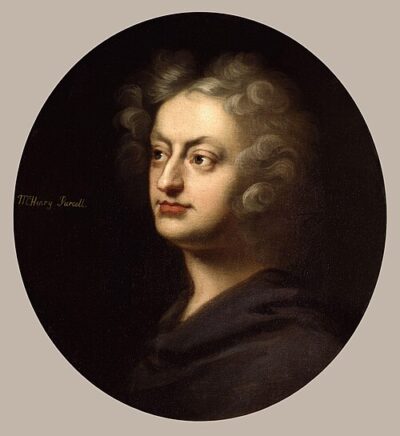
Dido and Aeneas
Dido and Aeneas is an opera by Henry Purcell. It came out in 1688. It is based on Aeneid.
- Came out
- 1688
- Genre
- opera
- Country of origin
- Kingdom of England
All 7 facts, and where they come from
Facts
7 facts · 0 confirmed by two sources · 0 cited · 7 from one source
Where this comes from
Papalocal keeps its own record. It started from these sources; what each one said is kept here as it was copied, so a change on their side never changes this page by itself. Tap one to read its version.
What Wikidata says · copied November 17, 2026 · revision 2546126281
- Described as
- opera by Henry Purcell
- Other names
- Dido and Æneas, Dido & Aeneas
- What it is
- dramatico-musical work
- Music by
- Henry Purcell
- Genre
- opera · 1 reference
- Language
- English
- Country of origin
- Kingdom of England
- Based on
- Aeneid
- Came out
- 1688
- Wikipedias with a page
- 33
Wikidata item Q746646 (wikidata.org/wiki/Q746646), public domain (CC0). Copied 2026-11-17.
What Wikipedia says · copied November 17, 2026 · revision 1380314849
Dido and Aeneas (Z. 626) is an opera in a prologue and three acts, written by the English Baroque composer Henry Purcell with a libretto by Nahum Tate. The dates of the composition and first performance of the opera are uncertain. It was composed no later than July 1688, and had been performed at Josias Priest's girls' school in London by the end of 1689. Some scholars argue for a date of composition as early as 1683. The story is based on Book IV of Virgil's Aeneid. It recounts the love of Dido, Queen of Carthage, for the Trojan hero Aeneas, and her despair when he abandons her. A monumental work in Baroque opera, Dido and Aeneas is remembered as one of Purcell's foremost theatrical works. It was also Purcell's only true opera, as well as his only all-sung dramatic work. One of the earliest known English operas, it owes much to John Blow's Venus and Adonis, both in structure and in overall effect.
The influence of Cavalli's opera Didone is also apparent. Both works use the prologue/three acts format and there are similarities between, for instance, Mercury's solo in Didone and the solo "Come away fellow sailors" in Purcell's work.
From the Wikipedia article “Dido and Aeneas” (en.wikipedia.org/wiki/Dido_and_Aeneas), by its contributors, under CC BY-SA 4.0 (creativecommons.org/licenses/by-sa/4.0/). Copied 2026-11-17; not changed.
Confirmed Two sources agree. Cited One source, and it names where it got it. One source One source, without a reference of its own. Sources disagree The sources disagree. We show the best-supported value and keep theirs below.
Picture: Wikimedia Commons: Heinrich Friedrich Füger 006.jpg · See Commons file page