Dirac delta function
Dirac delta function is a pseudo-function δ such that an integral of δ(x-c)f(x) always takes the value of f(c).
All 1 facts, and where they come from
Facts
1 facts · 0 confirmed by two sources · 0 cited · 1 from one source
Where this comes from
Papalocal keeps its own record. It started from these sources; what each one said is kept here as it was copied, so a change on their side never changes this page by itself. Tap one to read its version.
What Wikidata says · copied November 17, 2026 · revision 2558781944
- Described as
- pseudo-function δ such that an integral of δ(x-c)f(x) always takes the value of f(c)
- Other names
- unit impulse symbol, Dirac function, unit pulse, unit impulse, Dirac delta distribution, impulse function
- Named after
- Paul Dirac
- Wikipedias with a page
- 49
Wikidata item Q209675 (wikidata.org/wiki/Q209675), public domain (CC0). Copied 2026-11-17.
What Wikipedia says · copied November 17, 2026 · revision 1358108068
In mathematical analysis, the Dirac delta function (or 𝜹 distribution), also known as the unit impulse, is a generalized function on the real numbers, whose value is zero everywhere except at zero, where it is infinite, and whose integral over the entire real line is equal to one. Thus it can be represented heuristically asδ(x)={0,x≠0∞,x=0such that∫−∞∞δ(x)dx=1.
Since no function has this property, modelling the delta "function" rigorously involves the use of limits or, as is common in mathematics, measure theory and the theory of distributions.
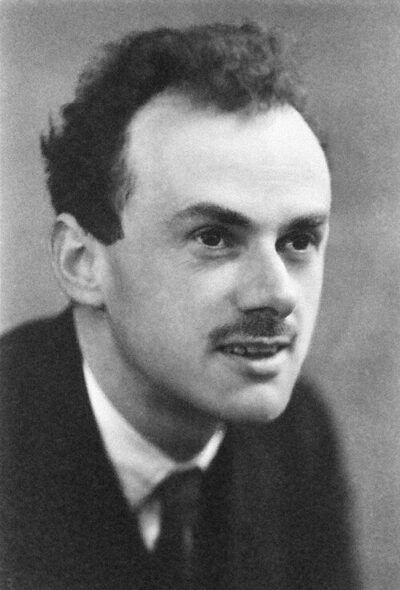
The delta function is named after physicist Paul Dirac, and has been applied routinely in physics and engineering to model point masses and concentrated loads. It is called the delta function because it is a continuous analogue of the Kronecker delta function. The mathematical rigor of the delta function was disputed until Laurent Schwartz developed the theory of distributions, where it is defined as a linear form acting on functions.
From the Wikipedia article “Dirac delta function” (en.wikipedia.org/wiki/Dirac_delta_function), by its contributors, under CC BY-SA 4.0 (creativecommons.org/licenses/by-sa/4.0/). Copied 2026-11-17; not changed.
Confirmed Two sources agree. Cited One source, and it names where it got it. One source One source, without a reference of its own. Sources disagree The sources disagree. We show the best-supported value and keep theirs below.