Discourses on Livy
Discourses on Livy is a treatise on political philosophy by Niccolò Machiavelli. It came out in 1531.
- Published
- 1531
- Written by
- Niccolò Machiavelli
- Genre
- treatise
- Country of origin
- Italy
All 6 facts, and where they come from
Facts
6 facts · 0 confirmed by two sources · 0 cited · 6 from one source
Where this comes from
Papalocal keeps its own record. It started from these sources; what each one said is kept here as it was copied, so a change on their side never changes this page by itself. Tap one to read its version.
What Wikidata says · copied November 17, 2026 · revision 2560762309
- Described as
- treatise on political philosophy by Niccolò Machiavelli
- Other names
- Los discursos sobre los primeros diez libros de Tito Livio
- What it is
- literary work
- Written by
- Niccolò Machiavelli
- Genre
- treatise
- Published
- 1531
- Language
- Tuscan
- Country of origin
- Italy
- Wikipedias with a page
- 30
Wikidata item Q924424 (wikidata.org/wiki/Q924424), public domain (CC0). Copied 2026-11-17.
What Wikipedia says · copied November 17, 2026 · revision 1386022069
The Discourses on Livy (Italian: Discorsi sopra la prima deca di Tito Livio, lit. 'Discourses on the First Ten of Titus Livy') is a work of political history and philosophy written in the early 16th century (c. 1517) by the Florentine political theorist Niccolò Machiavelli, best known as the author of The Prince. The Discourses were published posthumously with papal privilege in 1531.
The title identifies the work's subject as the first ten books of Livy's History of Rome, also known as Ab urbe condita, which relate the expansion of Rome through the end of the Third Samnite War in 293 BC, although Machiavelli discusses what can be learned from many other eras including contemporary politics. Machiavelli saw history in general as a way to learn useful lessons from the past for the present, and also as a type of analysis which could be built upon, as long as each generation did not forget the works of the past.
Machiavelli frequently describes Romans and other ancient peoples as superior models for his contemporaries, but he also describes political greatness as something which comes and goes amongst peoples, in cycles.
From the Wikipedia article “Discourses on Livy” (en.wikipedia.org/wiki/Discourses_on_Livy), by its contributors, under CC BY-SA 4.0 (creativecommons.org/licenses/by-sa/4.0/). Copied 2026-11-17; not changed.
Confirmed Two sources agree. Cited One source, and it names where it got it. One source One source, without a reference of its own. Sources disagree The sources disagree. We show the best-supported value and keep theirs below.
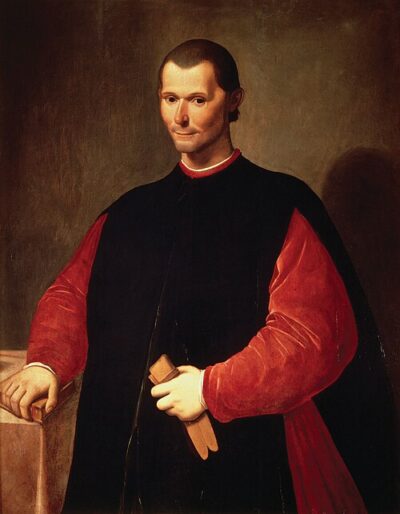
Picture: Wikimedia Commons: Machiavelli, Discorsi sopra la prima deca.jpg · See Commons file page