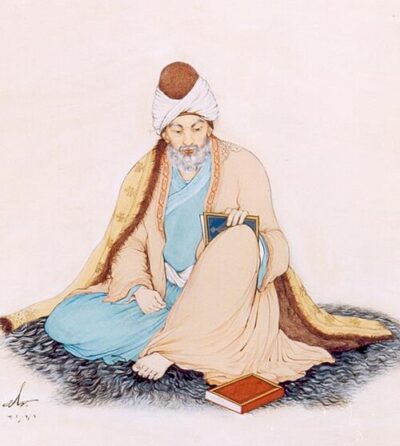
Diwan-e Shams-e Tabrizi
Diwan-e Shams-e Tabrizi is a Large collection of poems by Rumi.
- Written by
- Rumi
- Genre
- poetry
All 7 facts, and where they come from
Facts
7 facts · 0 confirmed by two sources · 0 cited · 7 from one source
Where this comes from
Papalocal keeps its own record. It started from these sources; what each one said is kept here as it was copied, so a change on their side never changes this page by itself. Tap one to read its version.
What Wikidata says · copied November 17, 2026 · revision 2529448563
- Described as
- Large collection of poems by Rumi
- Other names
- The Works of Shams of Tabriz
- What it is
- literary work
- Written by
- Rumi
- Genre
- poetry; ghazal
- Language
- Persian; Cappadocian Greek
- Named after
- Shams Tabrizi
- Wikipedias with a page
- 22
Wikidata item Q1231638 (wikidata.org/wiki/Q1231638), public domain (CC0). Copied 2026-11-17.
What Wikipedia says · copied November 17, 2026 · revision 1362046667
Divan-i Kabir (Persian: دیوان کبیر), also known as Divan-i Shams (دیوان شمس) and Divan-i Shams-i Tabrizi (دیوان شمس تبریزی), is a collection of poems written by the Persian poet and Sufi mystic Rumi. A compilation of lyric poems written in the Persian language, it contains more than 40,000 verses and over 3,000 ghazals. While following the long tradition of Sufi poetry as well as the traditional metrical conventions of ghazals, the poems in the Divan showcase Rumi’s unique, trance-like poetic style. Written in the aftermath of the disappearance of Rumi’s beloved spiritual teacher, Shams-i Tabrizi, the Divan is dedicated to Shams and contains many verses praising him and lamenting his disappearance. Although not a didactic work, the Divan still explores deep philosophical themes, particularly those of love and longing.
From the Wikipedia article “Divan-i Shams-i Tabrizi” (en.wikipedia.org/wiki/Divan-i_Shams-i_Tabrizi), by its contributors, under CC BY-SA 4.0 (creativecommons.org/licenses/by-sa/4.0/). Copied 2026-11-17; not changed.
Confirmed Two sources agree. Cited One source, and it names where it got it. One source One source, without a reference of its own. Sources disagree The sources disagree. We show the best-supported value and keep theirs below.