Don Quixote
Don Quixote is a 1605 and 1615 novel by Miguel de Cervantes.
- Published
- 1605
- Written by
- Miguel de Cervantes
- Genre
- chivalric romance
- Country of origin
- Spain
All 9 facts, and where they come from
Facts
9 facts · 0 confirmed by two sources · 1 cited · 8 from one source
Where this comes from
Papalocal keeps its own record. It started from these sources; what each one said is kept here as it was copied, so a change on their side never changes this page by itself. Tap one to read its version.
What Wikidata says · copied November 17, 2026 · revision 2558010319
- Described as
- 1605 and 1615 novel by Miguel de Cervantes
- Other names
- The Ingenious Gentleman Don Quixote of La Mancha, Don Quijote de la Mancha
- What it is
- literary work
- Written by
- Miguel de Cervantes
- Genre
- chivalric romance; adventure fiction; parody; found manuscript
- Published
- 1605 · 1 reference; 1615 · 1 reference
- Language
- Early Modern Spanish
- Country of origin
- Spain
- Wikipedias with a page
- 147
Wikidata item Q480 (wikidata.org/wiki/Q480), public domain (CC0). Copied 2026-11-17.
What Wikipedia says · copied November 17, 2026 · revision 1385343746
Don Quixote is a novel by Miguel de Cervantes, written in Early Modern Spanish and published in two parts in 1605 and 1615. It is considered a founding work of Western literature and the first modern novel. Don Quixote is one of the most-translated books in the world and one of the best-selling books in history.
The plot revolves around the adventures of a member of the lowest nobility, a hidalgo from La Mancha named Alonso Quijano, who reads so many chivalric romances that he decides to become a knight-errant (caballero andante) to revive chivalry and serve his nation, under the name Don Quixote de la Mancha. He recruits as his squire a simple farm labourer, Sancho Panza, who brings an earthy wit to Don Quixote's lofty rhetoric. In the first part of the book, Don Quixote does not see the world for what it is and prefers to imagine that he is living out a knightly story meant for the annals of all time. As Salvador de Madariaga pointed out in his Guía del lector del Quijote (1972 [1926]), opposing Quixotization with Sanchification, "Sancho's spirit ascends from reality to illusion" while Don Quixote's does the opposite.
The book had a major influence on the literary community, being directly referenced in works of 19th‑century French literature such as Alexandre Dumas's The Three Musketeers (1844) and Edmond Rostand's Cyrano de Bergerac (1897). Even the word quixotic ('impractically idealistic') became part of language. Mark Twain referred to Don Quixote as having "swept the world's admiration for the mediaeval chivalry-silliness out of existence". It has been described by some as the greatest work ever written.
From the Wikipedia article “Don Quixote” (en.wikipedia.org/wiki/Don_Quixote), by its contributors, under CC BY-SA 4.0 (creativecommons.org/licenses/by-sa/4.0/). Copied 2026-11-17; not changed.
Confirmed Two sources agree. Cited One source, and it names where it got it. One source One source, without a reference of its own. Sources disagree The sources disagree. We show the best-supported value and keep theirs below.
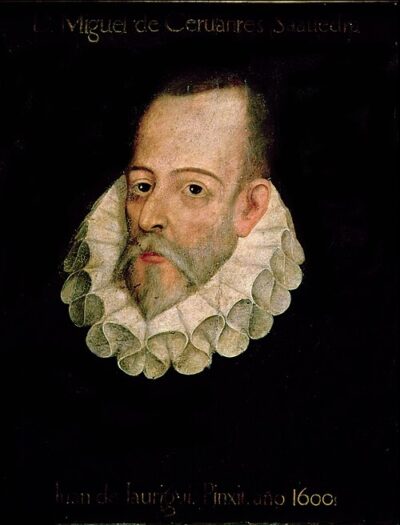
Picture: Wikimedia Commons: Miguel de Cervantes (1605) El ingenioso hidalgo Don Quixote de la Mancha.png · See Commons file page