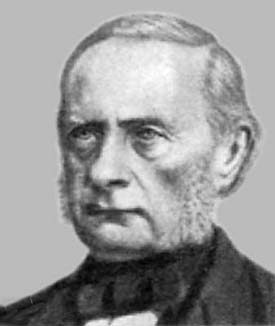
Duhamel's principle
Duhamel's principle is an in partial differential equations it gives the solution to the nonhomogeneous wave equation.
All 2 facts, and where they come from
Facts
2 facts · 0 confirmed by two sources · 0 cited · 2 from one source
Where this comes from
Papalocal keeps its own record. It started from these sources; what each one said is kept here as it was copied, so a change on their side never changes this page by itself. Tap one to read its version.
What Wikidata says · copied November 18, 2026 · revision 2402762368
- Described as
- in partial differential equations it gives the solution to the nonhomogeneous wave equation
- What it is
- mathematical concept
- Named after
- Jean-Marie Duhamel
- Wikipedias with a page
- 4
Wikidata item Q4378863 (wikidata.org/wiki/Q4378863), public domain (CC0). Copied 2026-11-18.
What Wikipedia says · copied November 18, 2026 · revision 1378628287
In mathematics, and more specifically in partial differential equations, Duhamel's principle is a general method for obtaining solutions to inhomogeneous linear evolution equations like the heat equation, wave equation, and vibrating plate equation. It is named after Jean-Marie Duhamel who first applied the principle to the inhomogeneous heat equation that models, for instance, the distribution of heat in a thin plate which is heated from beneath. For linear evolution equations without spatial dependency, such as a harmonic oscillator, Duhamel's principle reduces to the method of variation of parameters technique for solving linear inhomogeneous ordinary differential equations. It is also an indispensable tool in the study of nonlinear partial differential equations such as the Navier–Stokes equations and nonlinear Schrödinger equation where one treats the nonlinearity as an inhomogeneity.
The philosophy underlying Duhamel's principle is that it is possible to go from solutions of the Cauchy problem (or initial value problem) to solutions of the inhomogeneous problem. Consider, for instance, the example of the heat equation modeling the distribution of heat energy u in Rn. Indicating by ut (x, t) the time derivative of u(x, t), the initial value problem is
{ut(x,t)−Δu(x,t)=0(x,t)∈ℝn×(0,∞)u(x,0)=g(x)x∈ℝn
where g is the initial heat distribution. By contrast, the inhomogeneous problem for the heat equation,
{ut(x,t)−Δu(x,t)=f(x,t)(x,t)∈ℝn×(0,∞)u(x,0)=0x∈ℝn
corresponds to adding an external heat energy f (x, t) dt at each point. Intuitively, one can think of the inhomogeneous problem as a set of homogeneous problems each starting afresh at a different time slice t = t0. By linearity, one can add up (integrate) the resulting solutions through time t0 and obtain the solution for the inhomogeneous problem. This is the essence of Duhamel's principle.
From the Wikipedia article “Duhamel's principle” (en.wikipedia.org/wiki/Duhamel's_principle), by its contributors, under CC BY-SA 4.0 (creativecommons.org/licenses/by-sa/4.0/). Copied 2026-11-18; not changed.
Confirmed Two sources agree. Cited One source, and it names where it got it. One source One source, without a reference of its own. Sources disagree The sources disagree. We show the best-supported value and keep theirs below.