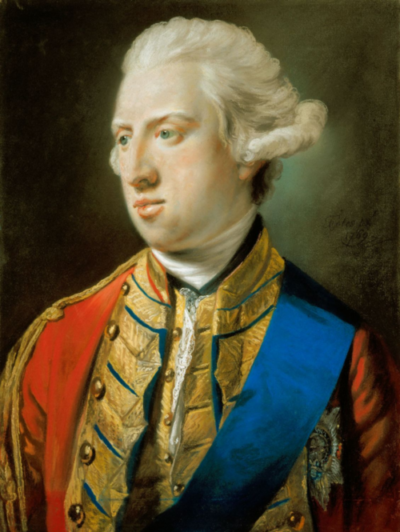
Duke of Gloucester and Edinburgh
The Duke of Gloucester and Edinburgh is a title in the Peerage of Great Britain. It was created in 1764.
- Country
- Kingdom of Great Britain
- Created
- November 19, 1764
All 7 facts, and where they come from
Facts
7 facts · 0 confirmed by two sources · 0 cited · 7 from one source
Where this comes from
Papalocal keeps its own record. It started from these sources; what each one said is kept here as it was copied, so a change on their side never changes this page by itself. Tap one to read its version.
What Wikidata says · copied November 17, 2026 · revision 2557936888
- Described as
- title in the Peerage of Great Britain
- What it is
- noble title
- Created
- November 19, 1764 · 1 reference
- Ended
- November 30, 1834 · 1 reference
- Country
- Kingdom of Great Britain; United Kingdom of Great Britain and Ireland
- Named after
- Gloucester; Edinburgh
- Wikipedias with a page
- 7
Wikidata item Q18164056 (wikidata.org/wiki/Q18164056), public domain (CC0). Copied 2026-11-17.
What Wikipedia says · copied November 17, 2026 · revision 1378864124
Duke of Gloucester and Edinburgh ( GLOST-ər) was a British title (after Gloucester and Edinburgh) in the Peerage of Great Britain; the sole creation carried with it the subsidiary title of Earl of Connaught.
It existed for the brother of King George III, Prince William Henry; there had been Dukedoms of Gloucester and of Edinburgh but their extinction gave the opportunity for combination.
The dukedom of Gloucester and Edinburgh was a royal dukedom when the duke was entitled to the style "His Royal Highness", as Prince William Henry was, but Prince William Frederick was only granted this style on his marriage in 1816.
From the Wikipedia article “Duke of Gloucester and Edinburgh” (en.wikipedia.org/wiki/Duke_of_Gloucester_and_Edinburgh), by its contributors, under CC BY-SA 4.0 (creativecommons.org/licenses/by-sa/4.0/). Copied 2026-11-17; not changed.
Confirmed Two sources agree. Cited One source, and it names where it got it. One source One source, without a reference of its own. Sources disagree The sources disagree. We show the best-supported value and keep theirs below.