Eddington luminosity
Eddington luminosity is a maximum luminosity of a body in hydrostatic equilibrium.
All 1 facts, and where they come from
Facts
1 facts · 0 confirmed by two sources · 0 cited · 1 from one source
Where this comes from
Papalocal keeps its own record. It started from these sources; what each one said is kept here as it was copied, so a change on their side never changes this page by itself. Tap one to read its version.
What Wikidata says · copied November 17, 2026 · revision 2527560241
- Described as
- maximum luminosity of a body in hydrostatic equilibrium
- Other names
- Eddington limit
- Named after
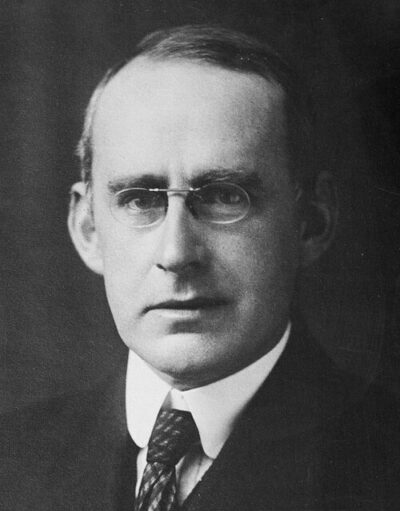
- Arthur Eddington
- Wikipedias with a page
- 31
Wikidata item Q853005 (wikidata.org/wiki/Q853005), public domain (CC0). Copied 2026-11-17.
What Wikipedia says · copied November 17, 2026 · revision 1384621020
The Eddington luminosity, also referred to as the Eddington limit, is the maximum luminosity a body (such as a star) can achieve when there is balance between the force of radiation acting outward and the gravitational force acting inward. The state of balance is called hydrostatic equilibrium. When a star exceeds the Eddington luminosity, it will initiate a very intense radiation-driven stellar wind from its outer layers.
Originally, Sir Arthur Eddington took only the electron scattering into account when calculating this limit, something that now is called the classical Eddington limit. Nowadays, the modified Eddington limit also takes into account other radiation processes such as bound–free and free–free radiation interaction.
From the Wikipedia article “Eddington luminosity” (en.wikipedia.org/wiki/Eddington_luminosity), by its contributors, under CC BY-SA 4.0 (creativecommons.org/licenses/by-sa/4.0/). Copied 2026-11-17; not changed.
Confirmed Two sources agree. Cited One source, and it names where it got it. One source One source, without a reference of its own. Sources disagree The sources disagree. We show the best-supported value and keep theirs below.