
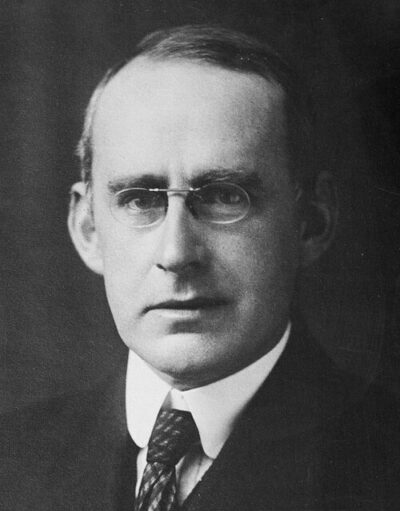
Arthur Eddington
Arthur Eddington was a British astrophysicist. Born December 28, 1882, in Kendal. Died November 22, 1944, in Cambridge. Positions held include professor and President of the Royal Astronomical Society (1921–1923). Known for general relativity, Eddington luminosity and Eddington number. Educated at Trinity College and Victoria University of Manchester. Awards include Fellow of the Royal Society, Prix Jules Janssen and Royal Medal.
Facts
57 facts · 2 confirmed by two sources · 17 cited · 38 from one source
Where this comes from
Papalocal keeps its own record. It started from these sources; what each one said is kept here as it was copied, so a change on their side never changes this page by itself. Tap one to read its version.
What Wikidata says · copied November 16, 2026 · revision 2559071198
- Described as
- British astrophysicist (1882-1944)
- Other names
- Sir Arthur Stanley Eddington, Sir Arthur Eddington
- Born
- December 28, 1882 · 12 references
- Died
- November 22, 1944 · 13 references
- Born in
- Kendal · 3 references
- Died in
- Cambridge · 3 references
- Buried in
- Ascension Parish Burial Ground · 1 reference
- Citizen of
- United Kingdom
- Occupation
- astronomer · 1 reference; astrophysicist; philosopher; physicist · 1 reference; mathematician · 1 reference
- Positions held
- professor; President of the Royal Astronomical Society (1921–1923)
- Worked for
- University of Cambridge (1912–1944); Cambridge Observatory (1914–1944); Royal Observatory (1906–1912)
- Education
- Trinity College (1902) · 1 reference; Victoria University of Manchester (1898–1902) · 1 reference; University of Cambridge · 1 reference
- Member of
- Royal Society of London; Royal Swedish Academy of Sciences; Hungarian Academy of Sciences; Royal Society of Edinburgh; American Academy of Arts and Sciences; Russian Academy of Sciences (1923–) · 1 reference; Royal Prussian Academy of Sciences; Royal Netherlands Academy of Arts and Sciences; International Astronomical Union · 1 reference; Bavarian Academy of Sciences and Humanities
- Known for
- general relativity · 1 reference; Eddington luminosity; Eddington number; arrow of time; Eddington experiment; Κ mechanism; Eddington–Finkelstein coordinates; radiation zone; Classical unified field theories; radiative transfer
- Awards
- Fellow of the Royal Society (1914) · 1 reference; Prix Jules Janssen (1928); Royal Medal (1928); Bruce Medal (1924) · 1 reference; Henry Draper Medal (1924) · 1 reference; Gold Medal of the Royal Astronomical Society (1924); Royal Society Bakerian Medal (1926) · 1 reference; Messenger Lectures (1933); Smith's Prize (1907) · 1 reference; honorary doctor of the University of Calcutta; Officer of the Order of the British Empire; Knight Bachelor (1930); Swarthmore Lecture; Honorary Fellow of the Royal Society Te Apārangi (1943–) · 1 reference; Order of Merit (1938)
- Field
- astrophysics
- Father
- Arthur Henry Eddington · 1 reference
- Mother
- Sarah Ann Shout · 1 reference
- Wikipedias with a page
- 77
Wikidata item Q215022 (wikidata.org/wiki/Q215022), public domain (CC0). Copied November 16, 2026.
What Wikipedia says · copied November 16, 2026 · revision 1383346439
Sir Arthur Stanley Eddington (28 December 1882 – 22 November 1944) was an English astrophysicist and mathematician. The Eddington limit, the natural limit to the luminosity of stars, or the radiation generated by accretion onto a compact object, is named in his honour.
Around 1920, he foreshadowed the discovery and mechanism of nuclear fusion processes in stars in his paper "The Internal Constitution of the Stars". At that time, the source of stellar energy was a complete mystery; Eddington was the first to correctly speculate that the source was fusion of hydrogen into helium.
Eddington wrote a number of articles that announced and explained Einstein's theory of general relativity to the English-speaking world. World War I had severed many lines of scientific communication, and new developments in German science were not well known in England. He also conducted an expedition to observe the solar eclipse of 29 May 1919 on the Island of Príncipe that provided one of the earliest confirmations of general relativity. As a populariser of science, he became known for his popular expositions and interpretations of Einstein's theory. As a philosopher of science, Eddington speculated on the implications of quantum mechanics on mind and matter.
- Born, in its opening lines
- December 28, 1882
- Died, in its opening lines
- November 22, 1944
From the Wikipedia article “Arthur Eddington” (en.wikipedia.org/wiki/Arthur_Eddington), by its contributors, under CC BY-SA 4.0 (creativecommons.org/licenses/by-sa/4.0/). Copied November 16, 2026; not changed.
Confirmed Two sources agree. Cited One source, and it names where it got it. One source One source, without a reference of its own. Sources disagree The sources disagree. We show the best-supported value and keep theirs below.
