general relativity
General relativity is a standard and classical physics theory of gravity and space. It came out in 1916.
- Came out
- 1916
All 3 facts, and where they come from
Facts
3 facts · 0 confirmed by two sources · 0 cited · 3 from one source
Where this comes from
Papalocal keeps its own record. It started from these sources; what each one said is kept here as it was copied, so a change on their side never changes this page by itself. Tap one to read its version.
What Wikidata says · copied November 16, 2026 · revision 2567603886
- Described as
- standard and classical physics theory of gravity and space
- Other names
- general theory of relativity, GR, GTR, Einstein's general theory of relativity
- What it is
- scientific theory; physical law
- Came out
- 1916
- Wikipedias with a page
- 132
Wikidata item Q11452 (wikidata.org/wiki/Q11452), public domain (CC0). Copied 2026-11-16.
What Wikipedia says · copied November 16, 2026 · revision 1385569689
General relativity, also known as the general theory of relativity, and as Einstein's theory of gravity, is the geometric theory of gravitation published by Albert Einstein in May 1916 and is the accepted description of the gravitation of macroscopic objects in modern physics. General relativity generalizes special relativity and refines Isaac Newton's law of universal gravitation, providing a unified description of gravity as a geometric property of space and time, or four-dimensional spacetime. In particular, the curvature of spacetime is directly related to the energy, momentum, and stress of whatever is present, including matter and radiation. The relation is specified by the Einstein field equations, a system of second-order partial differential equations. John Archibald Wheeler summarized it: "Space-time tells matter how to move; matter tells space-time how to curve."
Newton's law of universal gravitation, which describes gravity in classical mechanics, can be seen as a prediction of general relativity for the almost flat spacetime geometry around stationary mass distributions. Some predictions of general relativity, however, are beyond Newton's law of universal gravitation in classical physics. These predictions concern the passage of time, the geometry of space, the motion of bodies in free fall, and the propagation of light, and include gravitational time dilation, gravitational lensing, the gravitational redshift of light, the Shapiro time delay, singularities and black holes. So far, all tests of general relativity have been in agreement with the theory. The time-dependent solutions of general relativity enable us to extrapolate the history of the universe into the past and future, and have provided the modern framework for cosmology, thus leading to the discovery of the Big Bang and cosmic microwave background radiation. Despite the introduction of a number of alternative theories, general relativity continues to be the simplest theory consistent with experimental data.
Reconciliation of general relativity with the laws of quantum physics remains a problem, however, as no self-consistent theory of quantum gravity has been found. It is not yet known how gravity can be unified with the three non-gravitational interactions: strong, weak and electromagnetic.
Einstein's theory has astrophysical implications, including the prediction of black holes—regions of space in which space and time are distorted in such a way that nothing, not even light, can escape from them. Black holes are the end-state for massive stars. Microquasars and active galactic nuclei are believed to be stellar black holes and supermassive black holes. It also predicts gravitational lensing, where the bending of light results in distorted and multiple images of the same distant astronomical phenomenon. Other predictions include the existence of gravitational waves, which have been observed directly by the physics collaboration LIGO and other observatories. In addition, general relativity has provided the basis for cosmological models of an expanding universe.
Widely acknowledged as a theory of extraordinary mathematical beauty, general relativity has often been described as the "most beautiful of all existing physical theories."
From the Wikipedia article “General relativity” (en.wikipedia.org/wiki/General_relativity), by its contributors, under CC BY-SA 4.0 (creativecommons.org/licenses/by-sa/4.0/). Copied 2026-11-16; not changed.
Confirmed Two sources agree. Cited One source, and it names where it got it. One source One source, without a reference of its own. Sources disagree The sources disagree. We show the best-supported value and keep theirs below.
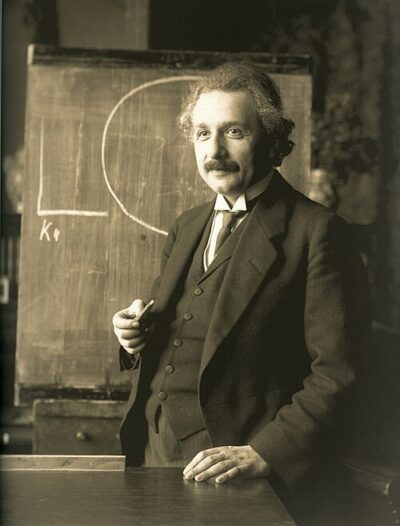
Picture: Wikimedia Commons: EinsteinLeiden4.jpg · See Commons file page
People connected 6
Field
 Stephen HawkingBritish theoretical physicist, cosmologist and author (1942–2018)
 Kip S. ThorneAmerican physicist (born 1940)
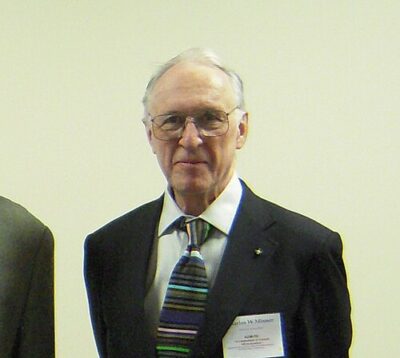 Charles W. MisnerAmerican physicist (1932–2023)
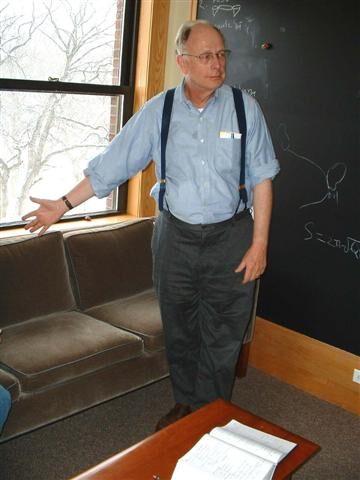 James HartleAmerican physicist (1939-2023)