
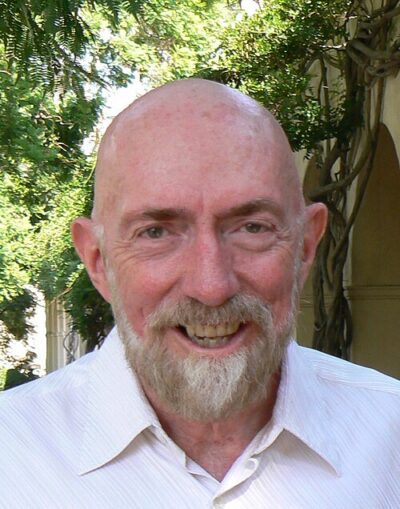
Kip S. Thorne
Kip S. Thorne is an American physicist. Born June 1, 1940, in Logan. Known for Black Holes and Time Warps and The Science of Interstellar. Educated at California Institute of Technology and Princeton University. Awards include Guggenheim Fellowship, UNESCO Niels Bohr Medal and Karl Schwarzschild Medal.
Facts
47 facts · 1 confirmed by two sources · 17 cited · 29 from one source
Where this comes from
Papalocal keeps its own record. It started from these sources; what each one said is kept here as it was copied, so a change on their side never changes this page by itself. Tap one to read its version.
What Wikidata says · copied November 13, 2026 · revision 2563199488
- Described as
- American physicist (born 1940)
- Other names
- Kip Stephen Thorne, Kip Thorne, K.S. Thorne, Dr. Kip Thorne
- Born
- June 1, 1940 · 8 references
- Born in
- Logan · 1 reference
- Name at birth
- Kip Stephen Thorne
- Citizen of
- United States
- Occupation
- physicist · 2 references; astronomer; writer; university teacher · 2 references; astrophysicist · 1 reference
- Worked for
- California Institute of Technology (1967–); Princeton University (1965–1966) · 1 reference; University of Utah · 1 reference; Leiden University (2009–) · 1 reference
- Education
- California Institute of Technology (–1962); Princeton University (1962–1965); Logan High School · 1 reference
- Member of
- National Academy of Sciences (1999–); American Academy of Arts and Sciences (1972–); American Physical Society; Russian Academy of Sciences (1999–); American Philosophical Society (1999–); International Astronomical Union
- Known for
- Black Holes and Time Warps; The Science of Interstellar
- Awards
- Guggenheim Fellowship · 1 reference; UNESCO Niels Bohr Medal (2010); Karl Schwarzschild Medal (1996) · 1 reference; Dr. Tomalla Prize (2016) · 1 reference; James Joyce Awards; Gruber Prize in Cosmology (2016) · 1 reference; Harvey Prize (2016) · 1 reference; Albert Einstein Medal (2009); Kavli Prize in Astrophysics (2016) · 1 reference; Shaw Prize (2016) · 1 reference; Georges Lemaître Prize (2016) · 2 references; Princess of Asturias Award for Technical and Scientific Research (2017) · 1 reference; Nobel Prize in Physics (2017) · 2 references; Richtmyer Memorial Lecture Award (1992) · 1 reference; Fellow of the American Physical Society
- Field
- physics; astronomy; gravitational-wave astronomy; general relativity
- Father
- David Wynne Thorne · 1 reference
- Mother
- Alison Comish Thorne
- Religion
- agnosticism
- Lived in
- United States · 1 reference
- Wikipedias with a page
- 69
Wikidata item Q323320 (wikidata.org/wiki/Q323320), public domain (CC0). Copied November 13, 2026.
What Wikipedia says · copied November 13, 2026 · revision 1385051661
Kip Stephen Thorne (born June 1, 1940) is an American astrophysicist and author. He shared the 2017 Nobel Prize in Physics with Rainer Weiss and Barry C. Barish "for decisive contributions to the LIGO detector and the observation of gravitational waves".
With John A. Wheeler and Charles Misner, he coauthored the general relativity textbook Gravitation in 1973. He has also written popular science, notably Black Holes and Time Warps in 1994 which was awarded the Phi Beta Kappa Award in Science for that year.
Thorne was the Richard P. Feynman Professor of Theoretical Physics at Caltech from 1991 until 2009. A longtime friend and colleague of Stephen Hawking and Carl Sagan, he advised Sagan on the physics of wormholes for his novel Contact. He was a scientific consultant for Christopher Nolan's films Interstellar and Tenet. He received the 2018 Lewis Thomas Prize for science writing.
- Born, in its opening lines
- June 1, 1940
From the Wikipedia article “Kip Thorne” (en.wikipedia.org/wiki/Kip_Thorne), by its contributors, under CC BY-SA 4.0 (creativecommons.org/licenses/by-sa/4.0/). Copied November 13, 2026; not changed.
Confirmed Two sources agree. Cited One source, and it names where it got it. One source One source, without a reference of its own. Sources disagree The sources disagree. We show the best-supported value and keep theirs below.
